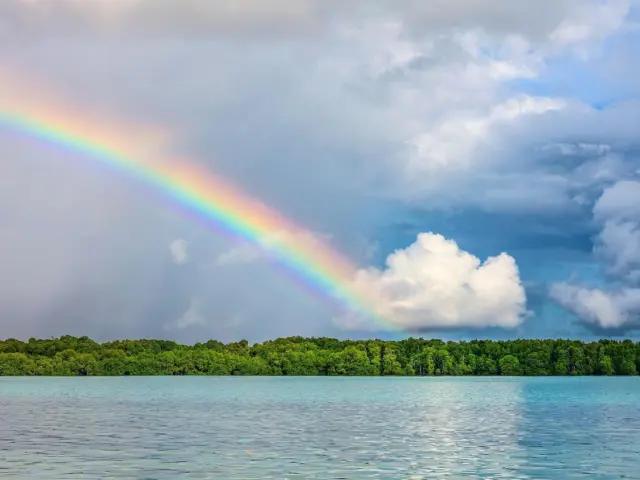
The best things to do in Bohol mix landscape, water and wildlife: the cone-shaped hills of the interior, river cruises, caves, mangroves, tarsier viewing, and reef trips off Panglao Island.
This guide groups the island’s main experiences by area so that a route makes sense on the map. It sits inside the wider Bohol tourism guide, which covers planning, transport and seasons in more detail.
This site is an independent travel guide. It is not run by the provincial government, the Bohol tourism office, the Department of Tourism, or any tour operator, resort or sanctuary. Fees, schedules and opening hours change often, so this page describes attractions without quoting prices; check current details with the operator or the local tourism office before travelling.
Bohol at a glance: a limestone island with a geopark title
Bohol is a province in the Central Visayas made up of a main island and many smaller ones. According to PhilAtlas, the province has a land area of 4,772.52 square kilometers and is divided into 47 municipalities and 1 city, with Tagbilaran as the capital. That is a lot of ground for a short stay, which is why most itineraries pick a few areas rather than trying to cover everything.
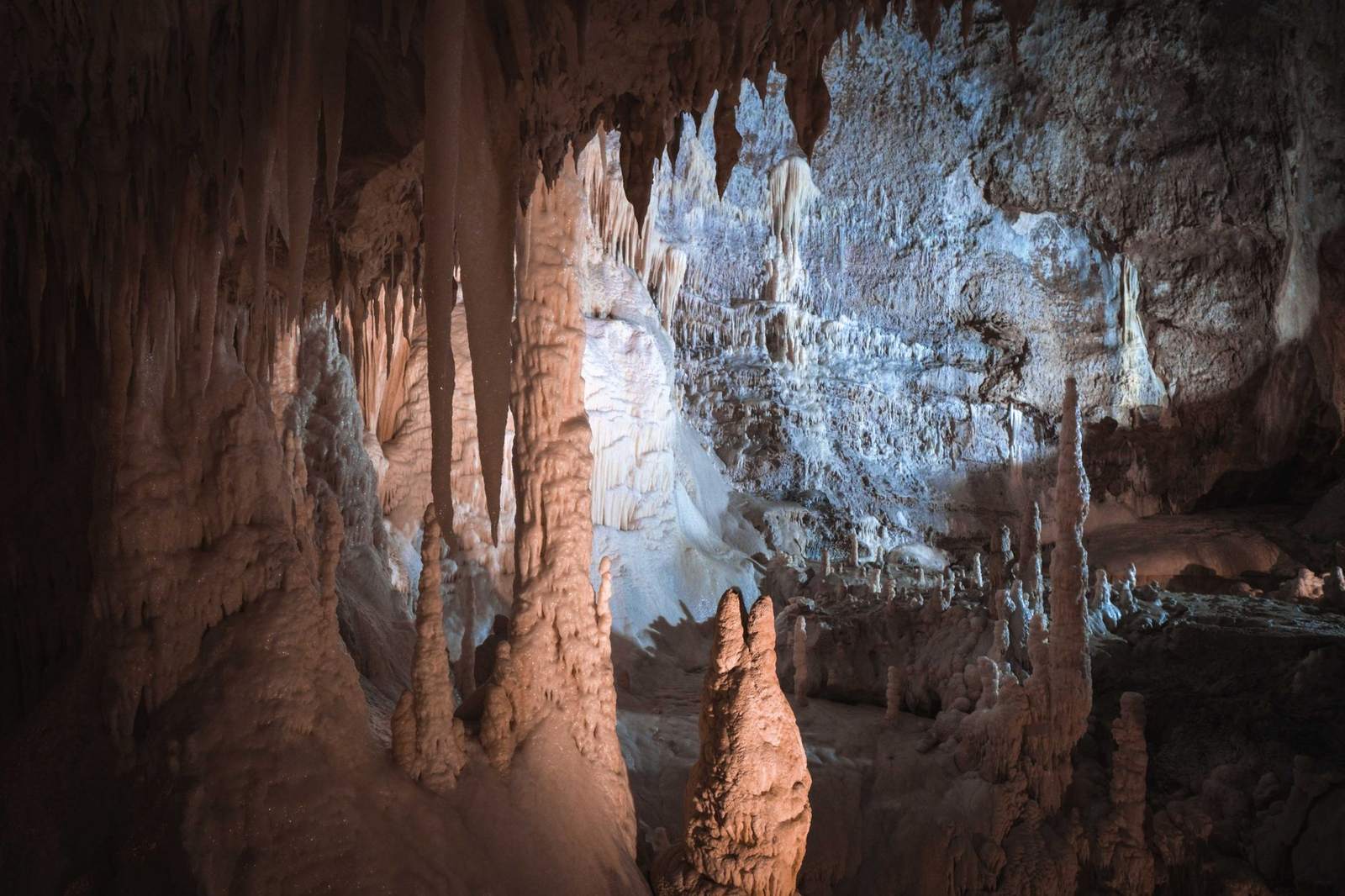
The island’s geology explains much of what visitors come to see. UNESCO describes Bohol Island as the Philippines’ first UNESCO Global Geopark, a status it received with the 2023 UNESCO Global Geopark designation. Its limestone has produced caves, sinkholes and the famous cone karst of the interior. Offshore, the same UNESCO page notes that the Danajon Double Barrier Reef along the northern coast is the only one of its kind in Southeast Asia and one of just six documented double barrier reefs on Earth.
In practice the island splits into three zones that suit different kinds of days. The interior holds the hills, forests and the Loboc River. The western coast around Tagbilaran and the Abatan River has mangroves, estuaries and firefly habitat. The southwest, on Panglao Island and the small islands beyond it, is the base for beaches, snorkelling, diving and marine wildlife trips.
The interior: hills, forests and the Loboc River
Chocolate Hills
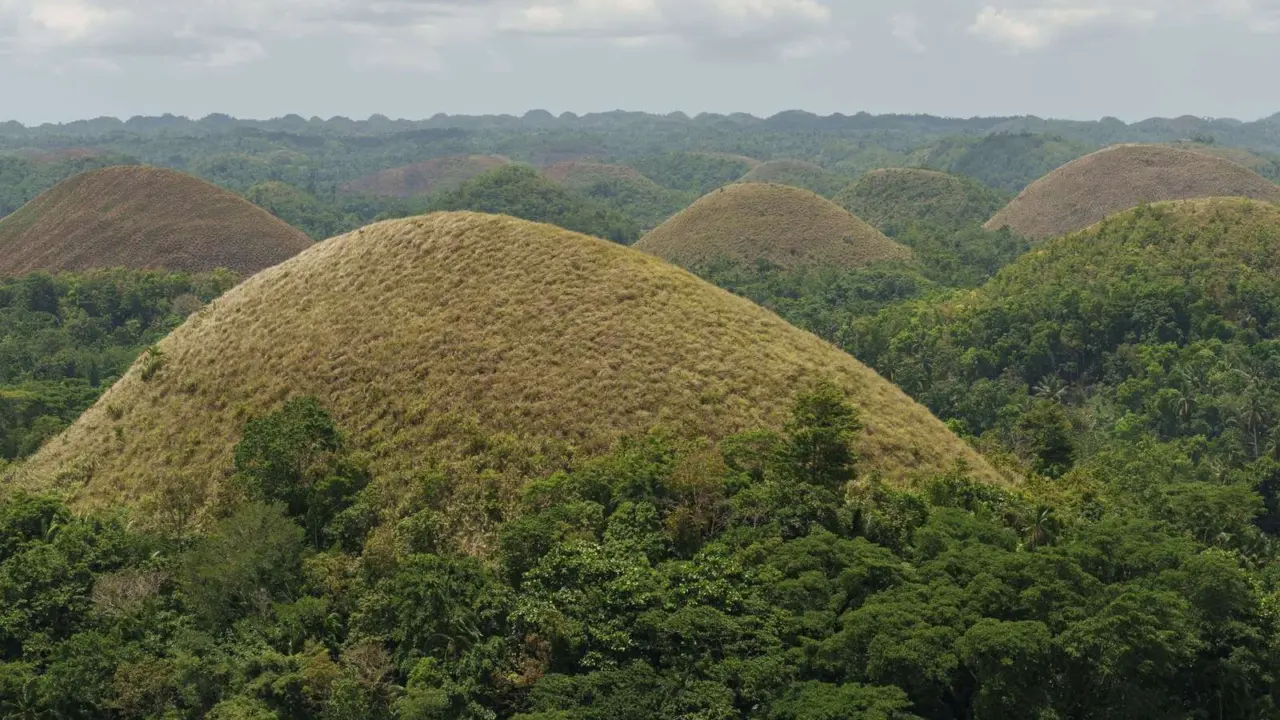
The chocolate hills are the image most people associate with the island. Wikipedia’s entry on the Chocolate Hills gives an estimated 1,268 to 1,776 individual mounds, with domes that vary in size from 30 to 50 meters, and records that the National Committee on Geological Sciences declared them a National Geological Monument on June 18, 1988.
The origin is geological rather than mythical. UNESCO’s geopark page says the hills are the result of thousands of years of erosion of limestone on what was once a thick build-up of coral reefs that thrived during the Pliocene. Viewing areas and short climbs give wide views over the rounded shapes.
Forests, parks and the biodiversity centre
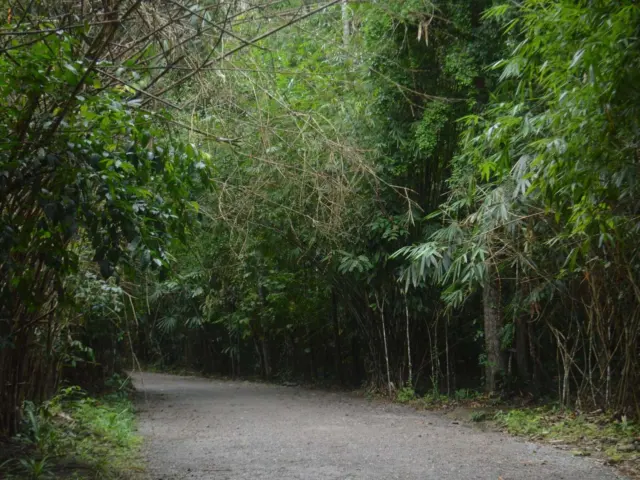
South of the hills, the road to Loboc passes through the Bilar man made forest, a mahogany corridor that is a popular photo stop between the hills and the river. Wikipedia’s list of Bilar attractions names the Bilar Man-made Mahogany Forest alongside the Bohol Biodiversity Center, and the road itself runs through the Rajah Sikatuna Protected Landscape, which covers 10,452.6 hectares and is described as the largest remaining tract of natural forest in Bohol and one of the Philippines’ top birdwatching sites.
Visitors who want something more structured than a roadside stop can pair the forest with the Bohol biodiversity complex nearby, a stop that fits the same stretch of road. The roadside forest is planted, so the protected landscape around it is the better place to look for native habitat.
Birdwatchers and slow walkers get the most from the protected landscape. Early mornings tend to be the quietest time for birdsong, and a local guide can identify calls and point out species that a casual visitor would miss. Stay on established paths, keep voices low and avoid playing recorded bird calls, which can disturb nesting birds.
Loboc River
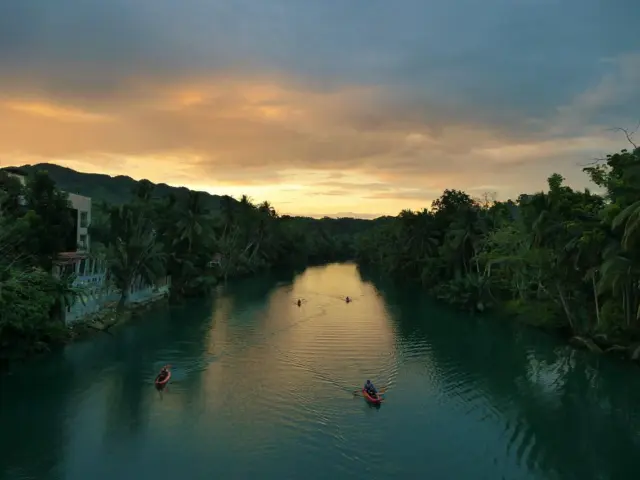
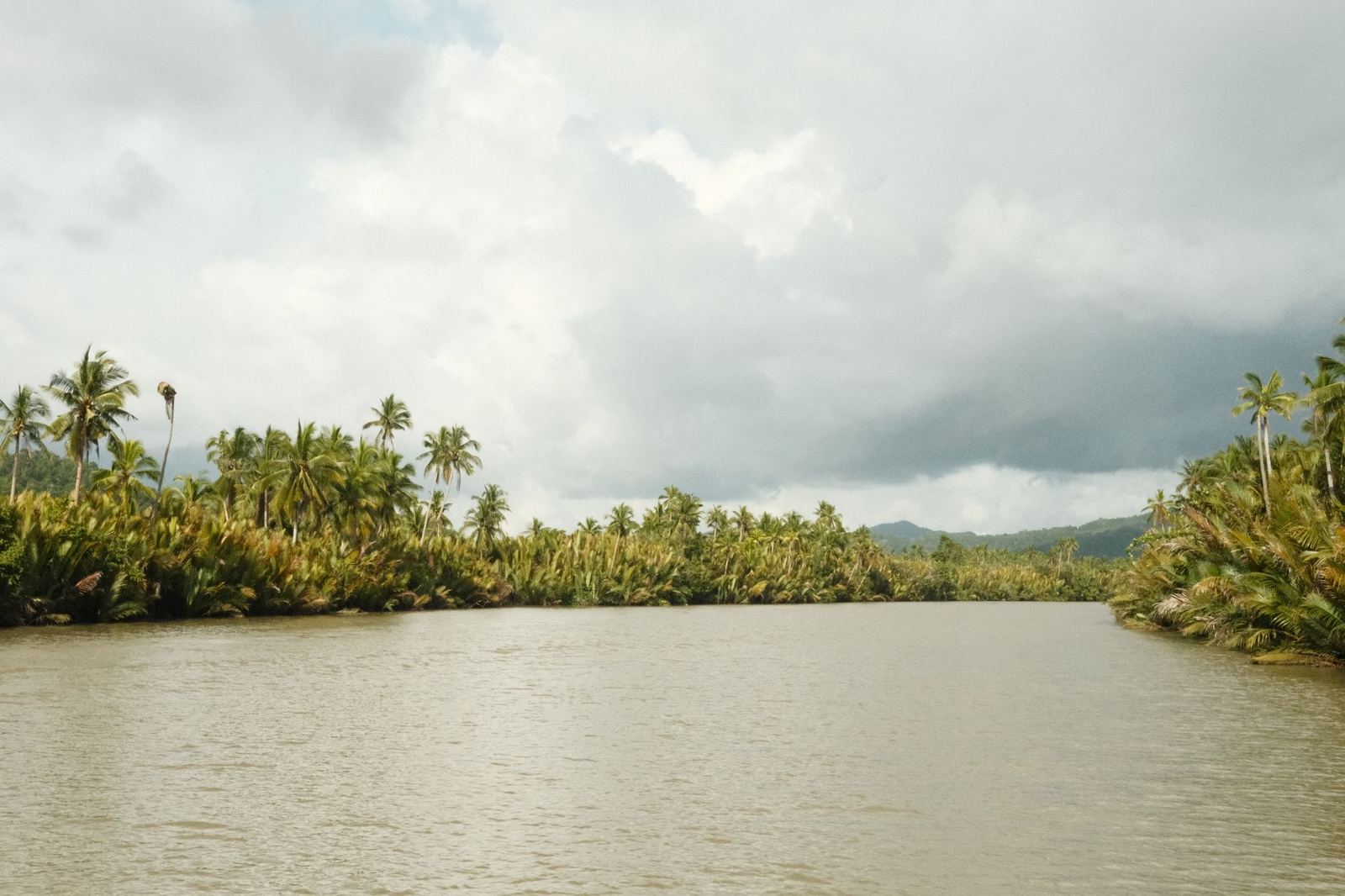
The Loboc River rises in Carmen and flows to the Bohol Sea at Loay. A Loboc river cruise is the standard way to see it, and Wikipedia’s Loboc River article notes that cruises and paddleboard trips typically feature a scenic trip upriver to Busay falls, with buffets, cultural presentations, birding and firefly watching at various points. The river passes through the centre of the town of Loboc and offers a view of the Loboc church from the water.
Most cruises are built around a floating restaurant, so the experience is relaxed rather than active. Travellers who prefer a quieter trip can ask operators about departure times and boat size, as availability varies.
West Bohol: caves, mangroves and fireflies
Hinagdanan Cave
On Panglao Island, Hinagdanan Cave is a short stop that is easy to combine with a beach day. Wikipedia places it in the municipality of Dauis, describes it as lit by sunlight filtering through holes in the ceiling, and gives its length as about 100 metres, with stalactites, stalagmites and a lagoon. The same article notes that people used to bathe there, but it is no longer advised due to karst pollutants in the water. Visitors should treat the lagoon as a place to look at rather than swim in unless the operator and current posted rules say otherwise.
Wet limestone is slippery, so closed-toe shoes with a grip help, and the narrow entrance means the cave can feel crowded quickly at busy hours. The name Hinagdanan means “laddered”, from the ladder first built to get inside.
Mangroves and river estuaries
Bohol’s western rivers end in mangrove estuaries, and a Bohol mangrove tour is a quiet alternative to the busier river cruises. Tours typically move by paddle or small boat through the tree roots, and the appeal is birds, crabs, shorebirds and the forest edge rather than anything dramatic. Mangroves also shield the coast from waves and act as nurseries for fish, which is a good reason to follow guide instructions, keep to marked channels and carry rubbish back out.
Cave visits work best as part of a loose Panglao day rather than a destination in their own right. A short stop fits between a morning on the water and a late lunch, and the lagoon is easy to appreciate from the steps without getting in the water. Visitors with limited mobility should ask about the stairs before committing, since the interior is reached by steps down from a hole in the hillside.
Abatan River fireflies
After dark, the Abatan river firefly tour takes small boats up a river lined with mangrove trees. According to Wikipedia’s Abatan River article, the river reaches its mouth at Cortes and its basin is home to 8 species of fireflies, including one that is very rare and endemic to the Philippines. Fireflies gather on certain trees and flash in clusters, which is why the best nights are the dark ones. Phone torches, camera flashes and loud talking disturb the insects and spoil the show for everyone aboard, so most operators ask guests to keep lights off.
Seeing wildlife responsibly: tarsiers and marine life
Few animals are as closely tied to Bohol’s image as the Philippine tarsier, a tiny nocturnal primate. A tarsier sanctuary Bohol visit usually means walking a short forest path where guides point out individuals asleep on branches during the day. Wikipedia’s entry on the Philippine tarsier records that a sanctuary run by the Philippine Tarsier Foundation is maintained in the town of Corella, and that the species is listed as Near Threatened on the IUCN Red List.
The welfare point matters more than the photo. The same article says that camera flashes and being touched stress the animal. A good visit therefore follows a few simple habits:
- Stay quiet and keep a respectful distance; never touch or hold a tarsier.
- Switch the flash off completely and avoid shining bright torches at the animal.
- Choose a place that keeps tarsiers in a natural habitat preserve rather than in cages or roadside displays.
- Skip any venue that offers tarsier handling or photographs with the animal in someone’s hands.
The same caution applies at sea. Dolphin and whale watching is a core livelihood for some island communities, and visitors can support responsible operators by choosing boats that keep their distance from animals, do not chase them and never encourage feeding or contact. Marine wildlife is wild, and sightings are never guaranteed.
Choosing well matters because demand shapes the industry. Operators that protect habitat, limit group sizes and train their guides tend to earn repeat business, while those that cut corners lose it. Reading recent reviews, asking direct questions about wildlife rules, and being willing to walk away from a venue that allows handling are the simplest ways for visitors to push standards upward.
Panglao and the islands: beaches, reefs and boat trips
Alona Beach and Panglao
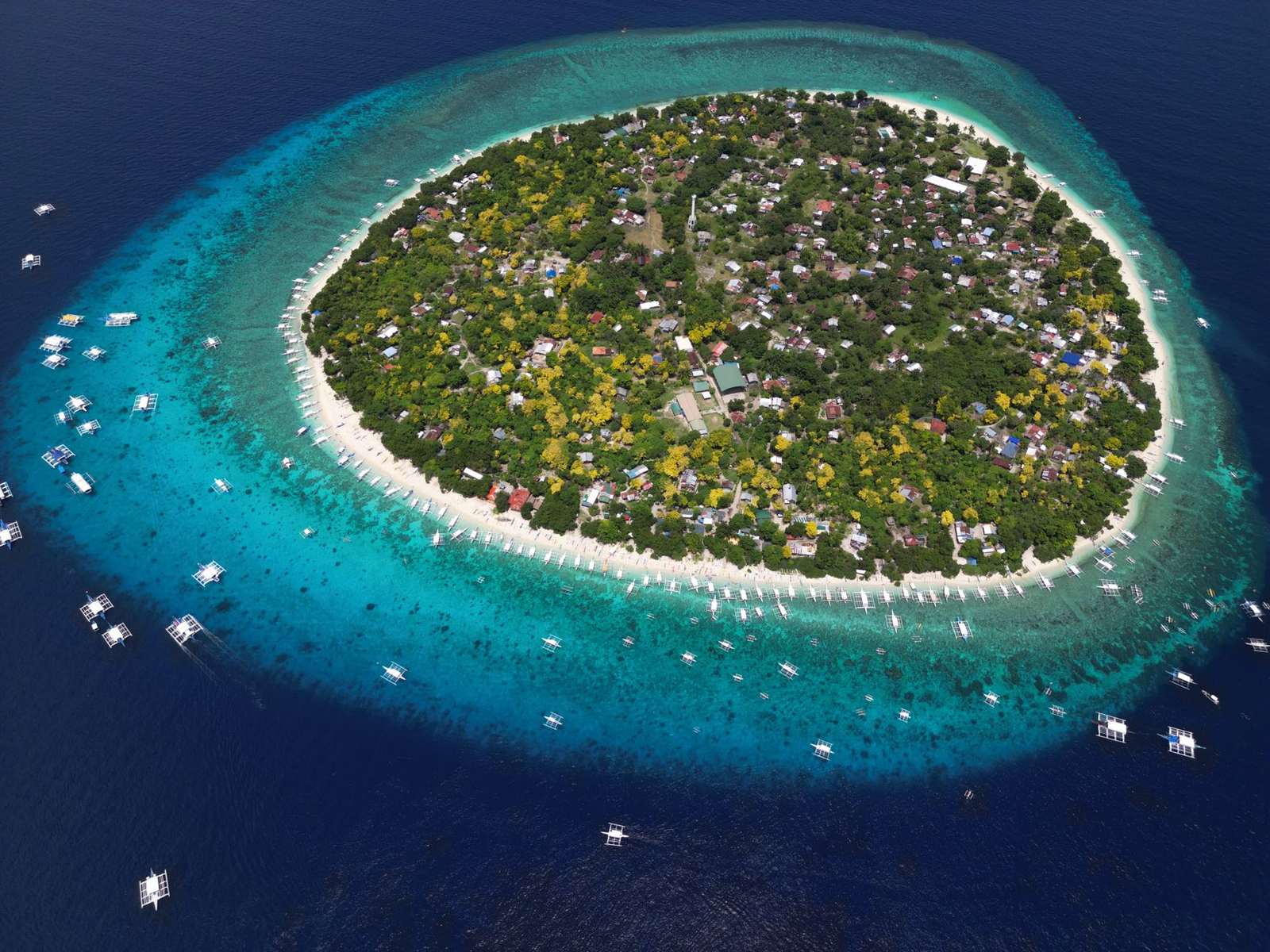
Many visitors base themselves on Panglao Island, which sits close to the airport. Wikipedia’s Panglao article says the municipality is 20 kilometres from Tagbilaran, that Bohol–Panglao International Airport has been operational since November 28, 2018, and that the island is renowned for snorkeling and dive sites. Alona beach is the best-known stretch, with white sand, restaurants, dive shops and a busy evening scene. Wikipedia’s Alona Beach entry describes it as a popular scuba-diving and snorkeling spot, and the article on Panglao also records criticism of unrestrained development at Alona that ignored municipal development policies.
Balicasag and Pamilacan
Two small islands are the usual boat-trip targets. Balicasag Island is part of Panglao municipality and is known for its marine sanctuary, where clear water and steep reef walls draw snorkellers and divers. Local rules generally restrict fishing and collecting inside sanctuaries, and visitors should follow guide instructions about where to enter the water and what not to touch. Reef-safe sunscreen, a rash guard and a calm approach to the water protect both swimmers and corals.
Pamilacan Island is a base for dolphin and whale watching. Wikipedia’s Pamilacan article describes a community of about 240 families whose main livelihoods now concentrate on dolphin- and whale-watching tours and subsistence fishing, with a history of whale, dolphin and manta ray hunting. The name itself may refer to a harpoon known as a pamilac, which is a reminder of how much the local economy has shifted toward conservation-linked tourism.
Island-hopping days are usually organised as a short or full-day boat trip from Panglao, often combining a snorkel stop with a beach stop. Weather decides everything at sea: operators may cancel or change routes when conditions turn rough, and a flexible schedule with a spare day makes that easier to absorb. Beginners can practise in shallow water near the beach before joining a reef trip, and anyone unsure about their swimming should wear a life vest and tell the crew.
Planning a route, the season and responsible habits
Grouping the sights
With so many options, the most useful decision is how to group them. The table lists the main attractions covered here by area and type of experience, so that sights close together can share a day.
| Attraction | Area | Type of experience |
|---|---|---|
| Chocolate Hills | Central Bohol | Viewpoints and short climbs |
| Bilar mahogany forest | Bilar | Scenic roadside stop |
| Bohol Biodiversity Center | Bilar | Nursery, plants and wildlife |
| Loboc River | Loboc and Carmen | River cruise and paddling |
| Tarsier sanctuary | Corella | Wildlife viewing with strict etiquette |
| Hinagdanan Cave | Dauis, Panglao Island | Cave and lagoon |
| Abatan River | Maribojoc to Cortes | Mangrove and firefly tours |
| Alona Beach | Panglao | Beach, snorkelling and diving |
| Balicasag Island | Panglao municipality | Marine sanctuary snorkelling and diving |
| Pamilacan Island | Baclayon | Dolphin and whale watching |
The groupings draw on municipality details in the Wikipedia article on Bohol and the Abatan River article.
A practical pattern is to dedicate a full day to the interior, covering the hills, the forest, the biodiversity centre and a river cruise, since these sit along one road. Another day suits the west for the cave, a mangrove paddle and an evening firefly trip. Panglao and its islands can fill the remaining days.
Season matters for sea trips more than for land sights. The Philippine weather agency PAGASA divides the national year into the rainy season, from June to November, and the dry season, from December to May, with the cool dry season running from December to February. The weather agency’s forecasts and warnings should be checked before boat trips. For broader preparation, including money, transport and etiquette, the Philippines travel tips guide covers the basics for first-time visitors.
History can round out a nature-heavy itinerary. The 1565 blood compact between the Bohol chieftain Datu Sikatuna and Miguel López de Legazpi, recorded in Wikipedia’s history of Bohol as having taken place on 16 March 1565, is commemorated in the province as the Sandugo, and the island’s old stone churches add a cultural stop to almost any route.
Matching activities to travel style
Families with young children usually do best with short, low-effort stops: a viewpoint at the hills, a river cruise with shade and seating, a firefly boat and a gentle beach. Active travellers can spend more time on dive and snorkel days, paddling tours and forest walks. Wildlife enthusiasts should build the itinerary around the tarsier sanctuary, the protected landscape and the dolphin-watching trips, leaving buffer time because animal encounters cannot be scheduled. Slow travellers can choose a single base and make short day trips instead of changing hotels, which saves time in transit and reduces the number of long road transfers.
Whatever the style, a loose plan beats a packed one. Road travel across the interior takes longer than the map suggests, boats depend on the weather, and the most memorable moments often come from unhurried time at a single place rather than a checklist of stops.
What to bring
Light, breathable clothing, a hat, sun protection and a reusable water bottle cover most days. Sturdy sandals or shoes with grip are useful for caves, river landings and slippery boat steps, while a dry bag keeps phones and documents safe on boats. A small torch with a red or dim setting helps on forest paths after dark, but should stay off around fireflies and wildlife. Cash in small notes is often easier than cards at small piers and roadside stops, and a printed or offline copy of booking details helps where signal drops.
Visiting responsibly
- Book through licensed local operators and ask about group size, boat safety gear and what is included before paying.
- Carry reusable bottles and a bag for rubbish; island water and waste systems are limited.
- Treat caves, mangroves and reefs as fragile: stay on paths, do not stand on coral and never take shells, corals or plants.
- Ask permission before photographing residents, and shop locally for crafts and food.
- Check sea conditions and weather warnings on the day, and accept a cancelled trip as part of island travel.
Frequently asked questions
What are the top things to do in Bohol?
The most common highlights are the Chocolate Hills, a Loboc River cruise, a visit to a tarsier sanctuary, Hinagdanan Cave, an evening firefly trip, and snorkelling or diving around Panglao and Balicasag.
How many days does Bohol need?
A short stay can cover the interior highlights and one island trip, while a longer stay allows slower days at the beach and extra sea excursions. The right length depends on how much of the west coast and Panglao a traveller wants to add.
Is it right to touch or photograph tarsiers with a flash?
No. Published guidance describes camera flashes and being touched as stressors for the animal, so visitors should stay quiet, keep their distance and turn the flash off.
Can the Chocolate Hills be visited in the rainy season?
Yes. Rain and cloud can hide the views, so flexible plans help, and the PAGASA seasons above are a guide to when rain is more likely.
Where is the best base for a first trip?
Panglao Island is the usual choice because of the beaches and airport, while Tagbilaran and the countryside suit travellers who plan to spend most days in the interior.