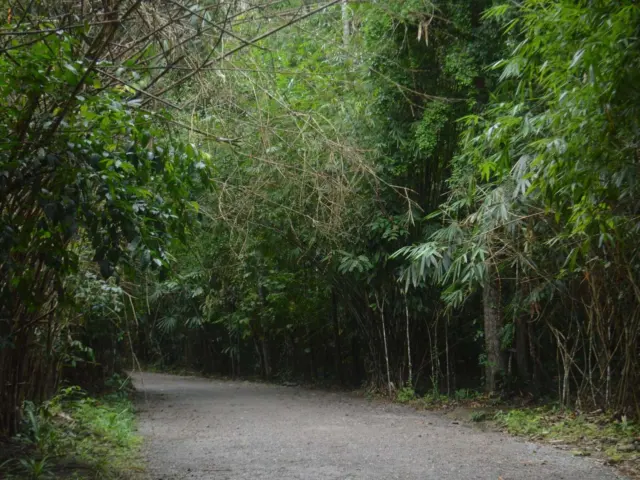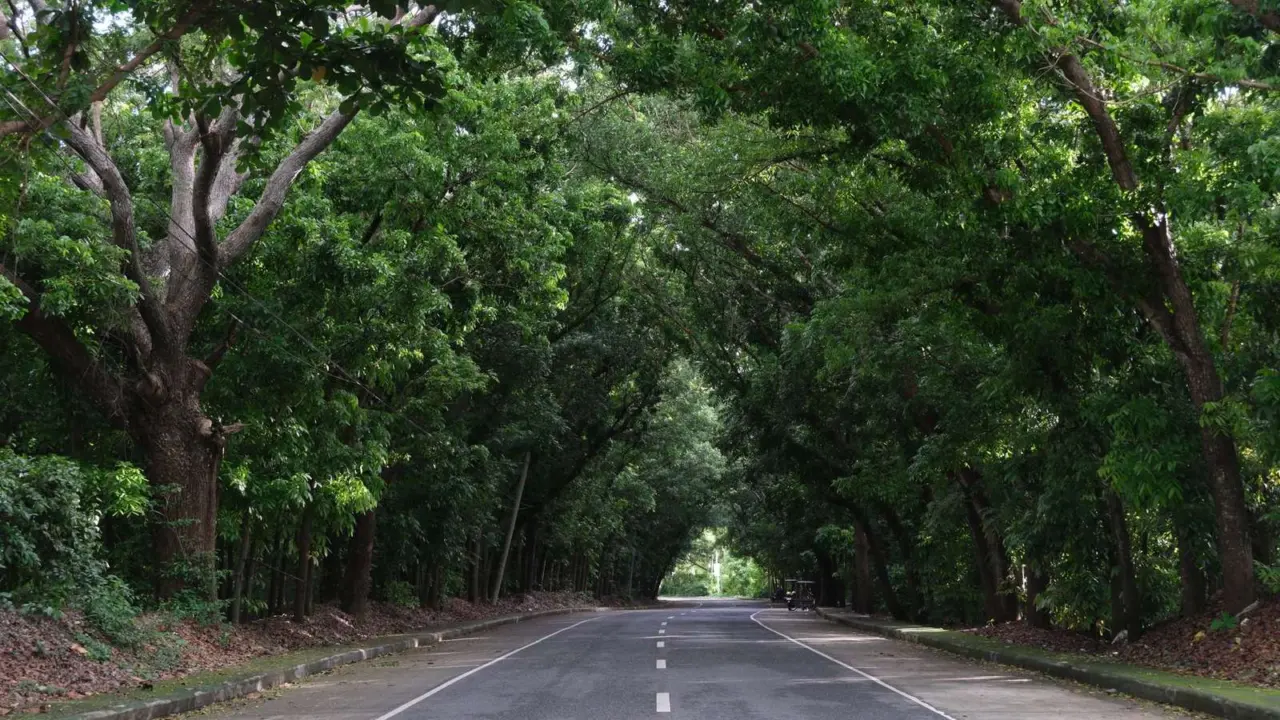
The Bilar man made forest is a 2-kilometer corridor of planted mahogany trees along the road between Loboc and Bilar in central Bohol, and it works best as a scenic stop inside a longer day route.
For the wider island picture, the things to do in Bohol guide places this roadside attraction alongside the hills, rivers, reefs and caves that fill most itineraries.
Where the mahogany corridor sits
The forest is not a park with gates and trails so much as a stretch of highway. Drivers enter a tunnel of tall, evenly spaced trunks whose crowns meet overhead, and the road bends through the shade. A travel guide on the corridor notes that the canopy above almost completely cuts out the sun, and a feature from the Global Landscapes Forum agrees that the temperature in the area feels noticeably cooler.
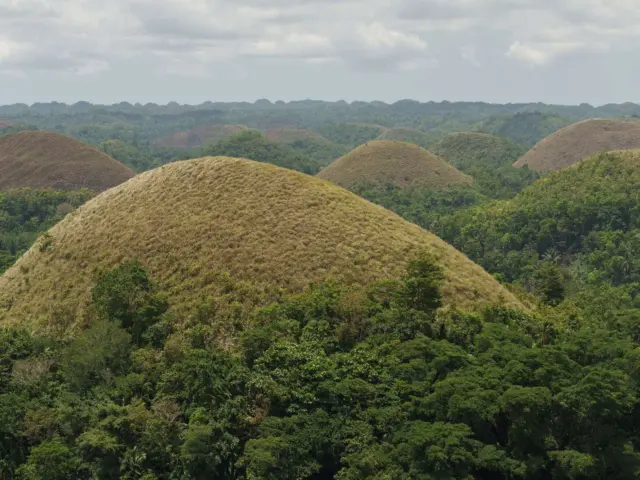
The setting is the interior highland of Bohol rather than the coast. The municipality of Bilar, which gives the forest its name, is a landlocked town, and its location on the route toward the Chocolate Hills explains why the corridor shows up on so many countryside itineraries.
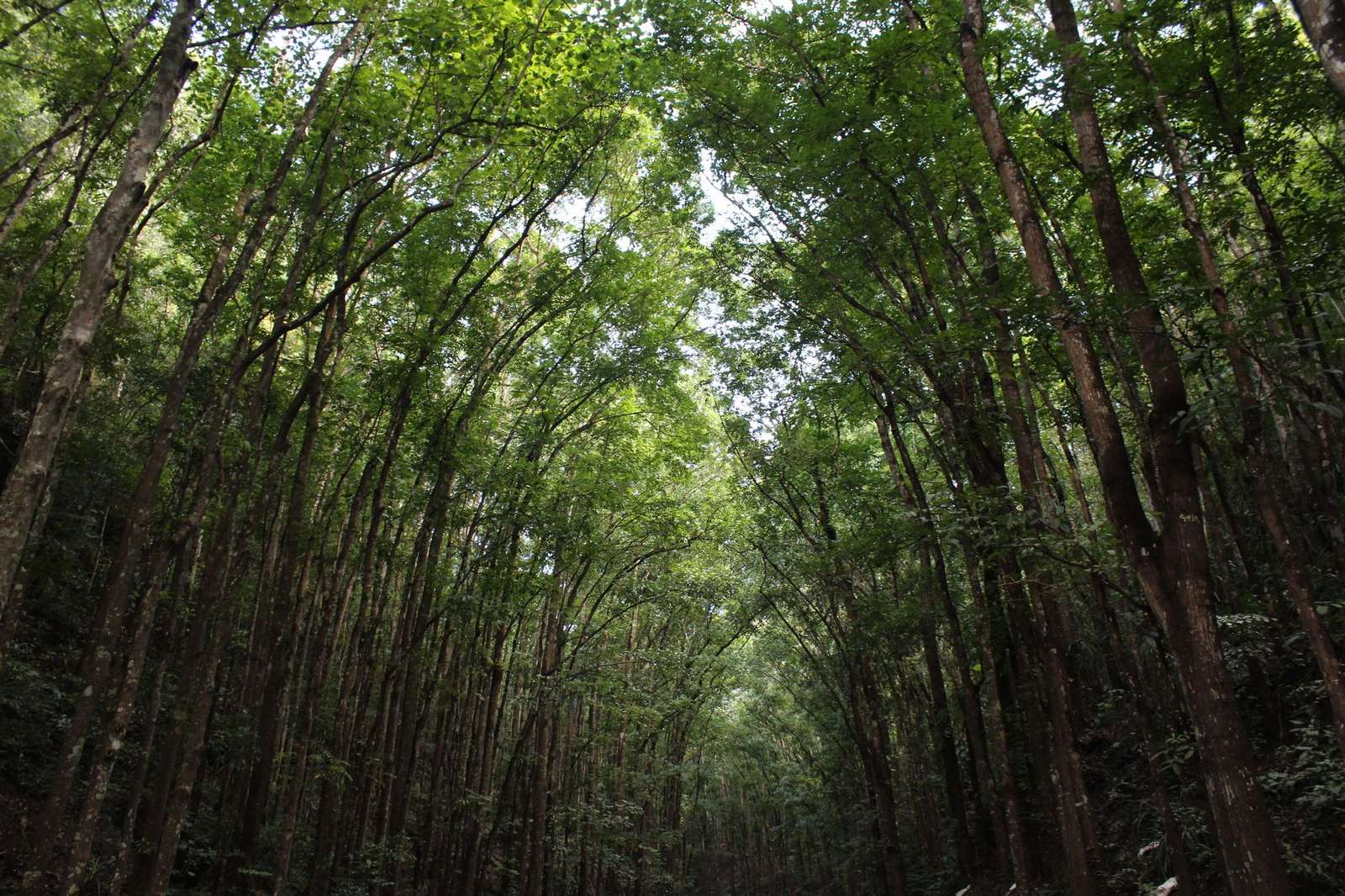
The experience is a pause rather than a destination. The interest lies in the contrast between the shaded corridor and the open roads around it, and the main activity is looking up at the trunks and photographing the tunnel effect.
A reforestation project from the 1950s
The trees were planted on purpose. According to the Global Landscapes Forum, the forest belongs to a reforestation project launched in the 1950s that aimed to revive land denuded by slash-and-burn farming, known locally as kaingin, in the Loboc watershed. That origin is why the place carries the name man-made forest: nothing about its straight lines and single species happened by accident.
The species chosen was big-leaf mahogany, Swietenia macrophylla. The same feature explains that mahogany was first introduced to the Philippines in 1907 for reforestation, valued for fast growth and tolerance of stress. Planting a single fast-growing timber species on bare, eroded slopes is what gives the corridor its uniform look.
A separate protected area in the same part of Bohol shares a piece of this history. A report in The Freeman states that the Rajah Sikatuna Protected Landscape was formerly part of the Loboc Watershed Reforestation Project. That statement describes the protected landscape and its past. It does not describe the boundary of the roadside corridor, so this guide treats the mahogany stretch and the protected landscape as separate places to read about.
The silence under the mahogany canopy
Many visitors notice the silence. The Global Landscapes Forum feature describes a place where chirping birds and insects are nowhere to be heard or found, and it links that quiet to the trees themselves. In its account, local birds and insects do not treat the fruits and canopies of the planted mahogany as edible or suitable habitat.
The same article raises a wider concern about the species. It points out that the mahogany is a non-native species in the Philippines and that mahogany has an allelopathic effect on its surroundings, meaning it produces chemicals that inhibit the growth of surrounding vegetation. Allelopathy is a plant-to-plant effect, so it does not by itself explain the missing birdsong, but it helps explain why little grows beneath planted mahogany stands.
Basil Castaño, an environmentalist quoted in the feature, argues for caution: “Mahogany is a good lumber, but the problem with mahogany is that when you use it in reforestation, it will colonize the area because it grows so fast that it will dominate the local species.” That is one side of an ongoing debate about reforestation with introduced timber species, and it is a useful frame for a visit. The corridor is a scenic and historical landmark, and it is also a case study in how the choice of tree shapes what lives underneath.
Bilar at a glance
The corridor takes its name from the town, and a few basic facts help place it on the map. The table below summarizes the municipality.
| Item | Detail |
|---|---|
| Type | Landlocked municipality in Bohol |
| Barangays | 19 barangays |
| Estimated elevation | 298.4 meters above sea level |
| Population, 2020 Census | 18,512 |
Figures in the table come from the PhilAtlas profile of Bilar, which compiles Philippine Statistics Authority census data and describes Bilar as a landlocked municipality in the island province of Bohol.
Bilar is more than a place to drive through. The municipality page on Wikipedia lists a short set of local attractions that includes the Bilar Man-made Mahogany Forest, Bilar Rice Terraces and the Bohol Biodiversity Center, followed by Bilar Hill Park, Logarita Falls, Tinugdan Spring and Pangas Falls. Anyone who wants to stretch the stop into a longer visit can use that list as a starting point for further reading.
Pairing the stop with a central Bohol day
The corridor is rarely the whole plan. One travel guide notes that the forest can be combined with a visit to the Tarsier Conservation Sanctuary and also Chocolate Hills, because the attractions lie along the same road. That is why the forest tends to appear as a middle stop on countryside tours between the hills and the river towns.
Timing changes the experience. The same guide suggests visiting early in the morning or late in the afternoon, when the light is softer and the shaded road is easier to enjoy.
Other island experiences sit in different directions from this highland road. Evening wildlife outings such as the abatan river firefly tour are covered in a separate guide, and coastal trips such as pamilacan island belong to a very different part of the Bohol map. Treating the forest as a half-hour shaded interlude, then moving on, keeps a day plan realistic.
Visiting with care
The corridor is a working road, not a pedestrian promenade. The travel guide quoted above advises that visitors be prepared to encounter constant traffic on the road that goes through the forest. Because the shaded road is also a busy one, the guide’s note is a reminder to plan any photo stop around the traffic.
Wildlife rules matter in this part of Bohol too. For the neighboring protected landscape, regional environment officials have implemented a policy of no hunting, collecting, killing, and harvesting of wildlife species. Proclamation No. 287 lists the municipalities involved as Carmen, Sierra Bullones, Garcia Hernandez, Valencia, Dimiao, Bilar and Batuan. Visitors who continue into protected forest should follow posted rules and local guidance.
Respect for the trees themselves is a simple courtesy. They are planted timber trees that now serve as a public landscape, so leaving bark, roots and surrounding soil undisturbed keeps the setting intact for the next group of visitors. Quiet voices also suit a place that visitors often describe as hushed.
Setting expectations for the stop
The Bilar forest rewards realistic expectations. It is a short, shaded drive created by a mid-century reforestation effort, not an untouched rainforest, and the reasons it feels quiet are part of the story. Read together, the planting history and the ecological critique give the corridor more depth than a photo stop alone.
For travelers, the practical lessons are simple. Pair the corridor with other highland sights on the same road, aim for softer light at the edges of the day, expect traffic, and treat any protected forest nearby according to its posted rules. Independent coverage of Bohol, including this guide, is not an official source for visiting conditions, so confirm access and local rules with the municipality or provincial tourism office before traveling.
Frequently asked questions
What is the Bilar man made forest?
It is a corridor of planted mahogany trees along the road between Loboc and Bilar, created through a reforestation project launched in the 1950s in the Loboc watershed.
Why is the forest so quiet?
A Global Landscapes Forum feature reports that birds and insects are scarce there and says local species do not treat the planted mahogany canopy as suitable habitat.
Is the mahogany a native tree?
No. The same feature describes Swietenia macrophylla as a non-native species in the Philippines that was introduced for reforestation in 1907.
What can be combined with the forest on a day trip?
A travel guide notes that the Tarsier Conservation Sanctuary and the Chocolate Hills lie along the same road, which makes them natural companions for a central Bohol route.