Hinagdanan Cave is a naturally lit limestone cavern in Barangay Bingag, Dauis, on Panglao Island in Bohol, with a deep lagoon and large stalactites and stalagmites.
This independent guide belongs with the wider list of things to do in Bohol. It covers where the cave sits, how it was found and named, what the chamber looks like, how its rock formations grow, the water-quality questions around the lagoon and the visitor details that have been published, each with its date. It is not run by the cave’s owners, the Dauis local government or the Bohol Provincial Tourism Office, and it takes no bookings and sets no fees.
Where Hinagdanan Cave sits on Panglao Island
The cave lies in Barangay Bingag, in the town of Dauis. The Bohol Provincial Tourism Office’s Dauis page describes Dauis as one of the two towns on the island of Panglao and says it is only three kilometers from the provincial capital. The same page lists the cave under the top things to do in Dauis, beside the Assumption of Our Lady Shrine-Parish church and the Bohol Bee Farm in Barangay Dao. A cave listing on Showcaves.com places the entrance 2.5 km from Dauis and 6 km from Tagbilaran City.
Dauis has a long documented history that explains why the cave is only one stop in a town worth a look. The provincial government’s municipal profile of Dauis notes that the parish was established in 1697 according to church records, and that the old church was erected in 1863. The tourism office page adds that the Church of Our Lady of the Assumption was declared a National Historical Landmark by the National Historical Commission. Municipal records were destroyed in the Second World War, so the profile treats the founding of the town as probable rather than exactly dated.
Discovery of the cave and the meaning of its name
The origin story comes from the cave’s Wikipedia entry. It says the cave was discovered by accident when the owner of the land was clearing decaying branches. He threw a stone into a hole and heard a splash. After building a ladder to get inside, he named the place Hinagdanan, which the entry translates as “laddered”.
The Showcaves.com listing uses the same idea, giving the cave the English title “Laddered Cave”. The name is a practical clue about the site: a drop into the ground, a ladder to reach the water and, today, cement steps in place of the improvised climb.
Inside the chamber: light, steps and lagoon
The entry describes a naturally lighted cavern, lit by sunlight that filters through holes in the ceiling. The entrance itself is a hole about 1 metre in diameter, visible from a limestone hill, and cement steps lead down to the interior. According to the same page, the floor is slippery, although a rope railing gives something to hold on to. The Showcaves.com listing gives the length as 100 m.
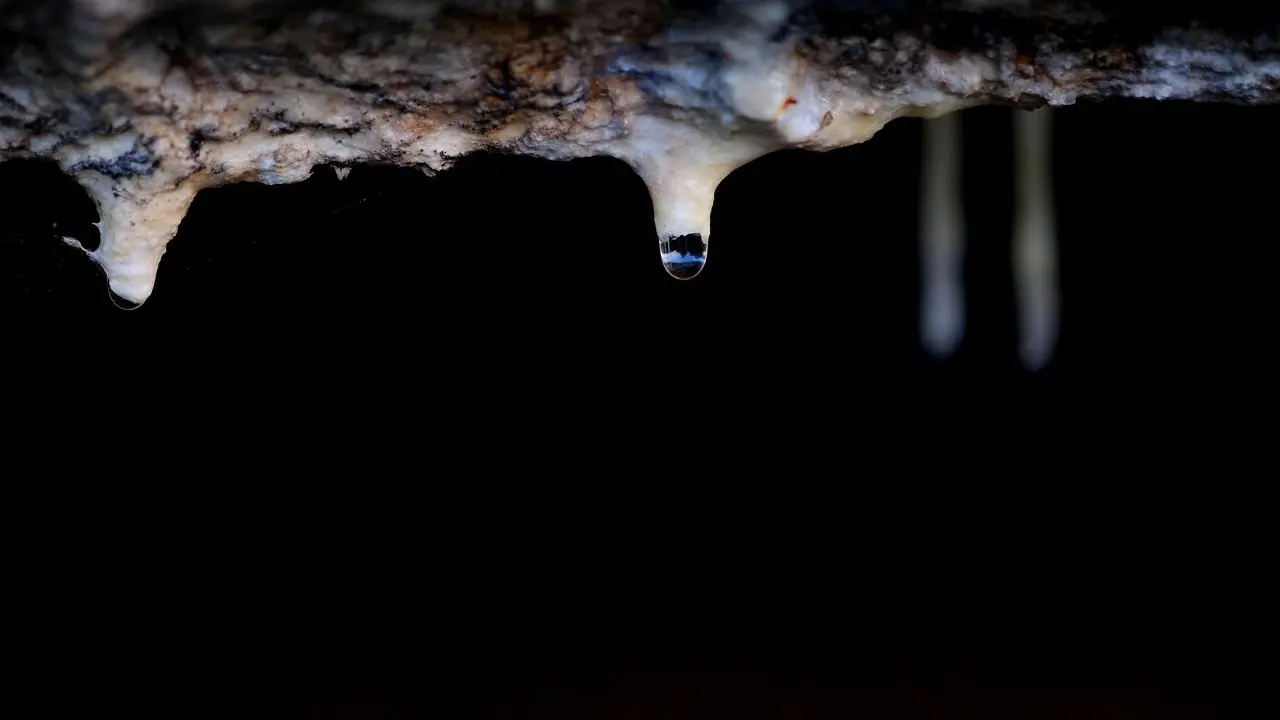
The Bohol Provincial Tourism Office summarises the attraction as an underground pool with impressive rock formations and stalactites and stalagmites. In practice, that means two things share the space: the pale, dripping stonework overhead and the dark water below. The entry says the lagoon has a green hue produced by the green limestone at its bottom, and that sleeping birds roost in small holes in the ceiling. Because the sunlight reaches so far in, the entry adds, the cave is unsuitable for bats.
Stalactites, stalagmites and columns: the science of dripstone
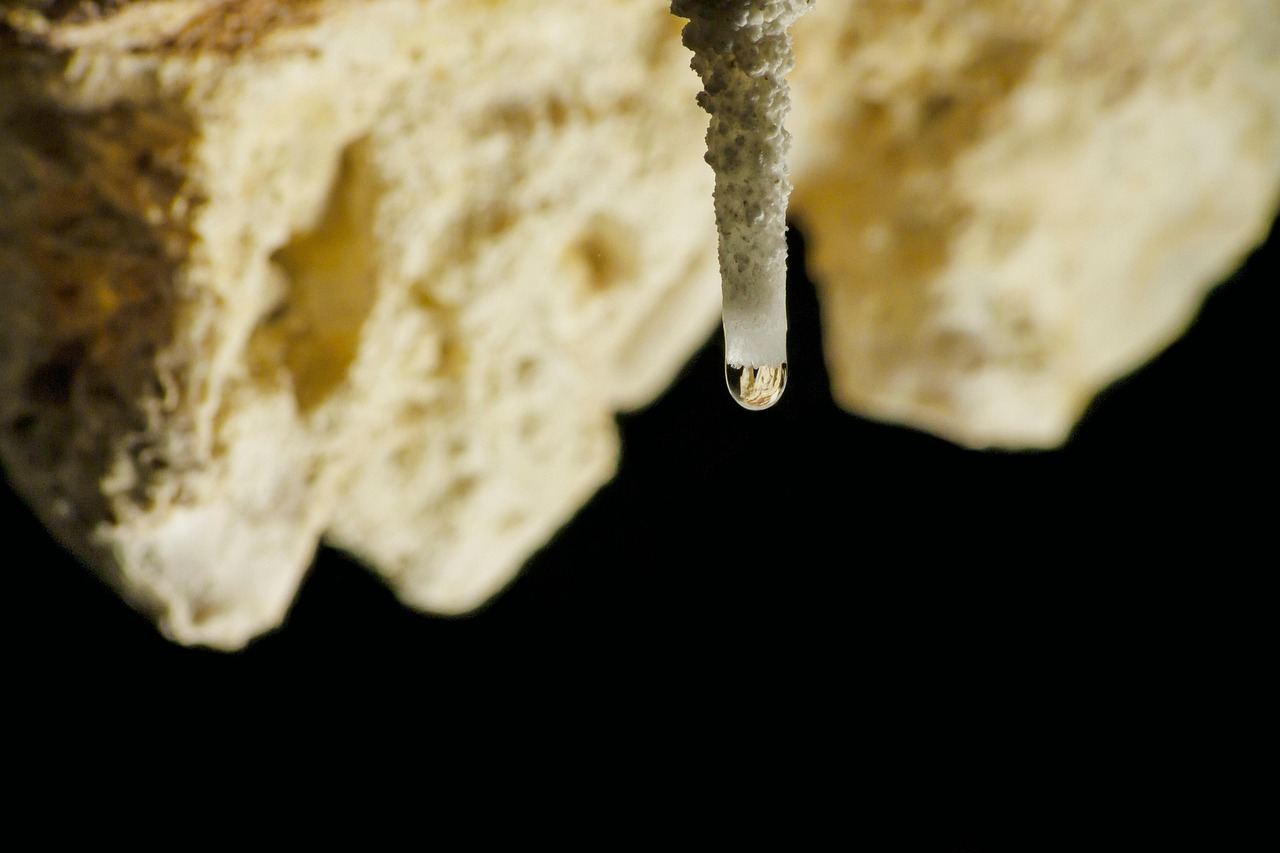
Hinagdanan is known for its dripstone, and the process behind it is well documented. The US National Park Service’s guide to speleothems explains that caves usually form below the water table, and that cave formations can only be deposited once the chamber is filled with air above that water table. That is the stage when the “decoration phase” of a cave begins.
The same guide describes stalactites as the most common and most familiar speleothems, resembling icicles or carrots hanging from cave ceilings. Stalagmites are convex floor deposits built up by water dripping from an overhead stalactite or from the cave ceiling. When a stalagmite grows together with its counterpart feeder stalactite, the result is a column or pillar. The word stalactite itself comes from a Greek phrase meaning “oozing out in drops”.
This is general cave science, not a description of any one feature at Hinagdanan. It does give a reader a way to look at the formations on the roof and the floor: pendants hang where water emerges, and rounded, broader mounds rise where the drips land.
Karst, the geopark and the lagoon’s water
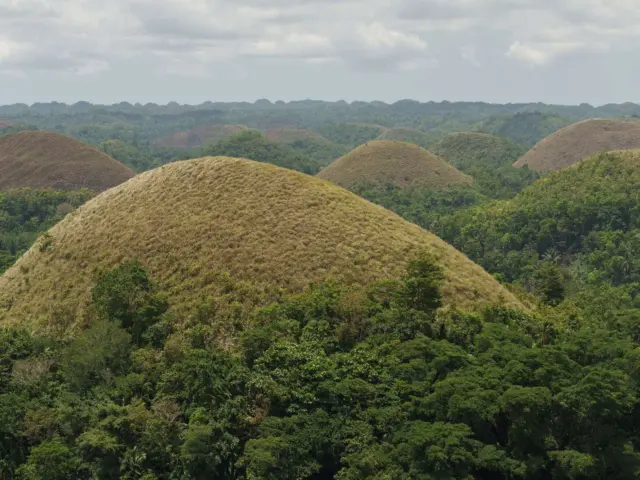
Panglao’s caves are part of a wider karst story across Bohol. When Bohol was named the Philippines’ first Global Geopark, The Philippine Star reported that the geopark abounds in karstic geosites such as caves, sinkholes and cone karst, including the famous cone-shaped Chocolate Hills at the centre of the geopark. The status was announced during the 216th session of UNESCO’s executive board. Hinagdanan Cave belongs to the same limestone landscape, a cave on a karst island, and this guide makes no claim about any formal geosite listing for it.
Karst also shapes how the lagoon behaves. The Showcaves.com page warns that the cave’s water comes directly from the surface and that karst water is very sensitive to any kind of water pollution outside. The Wikipedia entry, last edited on 7 March 2026, says the lagoon has been known to test for high levels of various pollutants because it is fed by ground runoff, and that although people used to bathe there, bathing is no longer advised due to karst pollutants in the water.
Those two statements pull in different directions from the fee list below, which shows a bathing charge that Showcaves.com recorded in 2025. Anyone considering a swim should rely on the rules posted at the site on the day and on any local health or tourism-office notice, because Showcaves.com and Wikipedia point in different directions on whether it is a good idea. This guide does not give medical advice.
Published hours and fees, dated
Hours and prices at a privately managed cave change without notice, and this guide is not the place to confirm them. The only dated listing used here is the Showcaves.com entry, marked 2025 on the page. The table repeats it as published.
| Item | Listing marked 2025 |
|---|---|
| Opening hours | Daily, 7:30 to 17:00 |
| Adult entry | PHP 50 |
| Local entry | PHP 30 |
| Parking | PHP 20 |
| Guide | PHP 300 |
| Bathing | PHP 100 |
The figures above come from the Showcaves.com listing for Hinagdanan Cave, as of 2025, and the page itself advises checking rates and details directly because they may have changed. The same listing says photography is allowed.
Pairing the cave with other stops
Because the cave is small and the visit is short, it combines easily with other places on the island. The tourism office lists the Dauis church and the Bohol Bee Farm in the same town. For a very different landscape, the Chocolate Hills show the same limestone geology as cone-shaped hills rather than a chamber underground. For a different habitat altogether, a bohol mangrove tour covers the coastal forest side of the island.
Frequently asked questions
What does Hinagdanan mean?
The Wikipedia entry translates it as “laddered”, a name given after the landowner built a ladder to enter the cave following its accidental discovery.
Where is the cave?
It is in Barangay Bingag, in the town of Dauis on Panglao Island, Bohol, according to the Bohol Provincial Tourism Office’s Dauis page.
Is swimming in the lagoon recommended?
Showcaves.com recorded a bathing fee in 2025 but cautions about polluted karst water, while Wikipedia says bathing is no longer advised. Follow the posted rules on the day.
Is this an official site for the cave?
No. It is an independent travel guide with no link to the cave’s operators, the Dauis local government or the provincial tourism office.