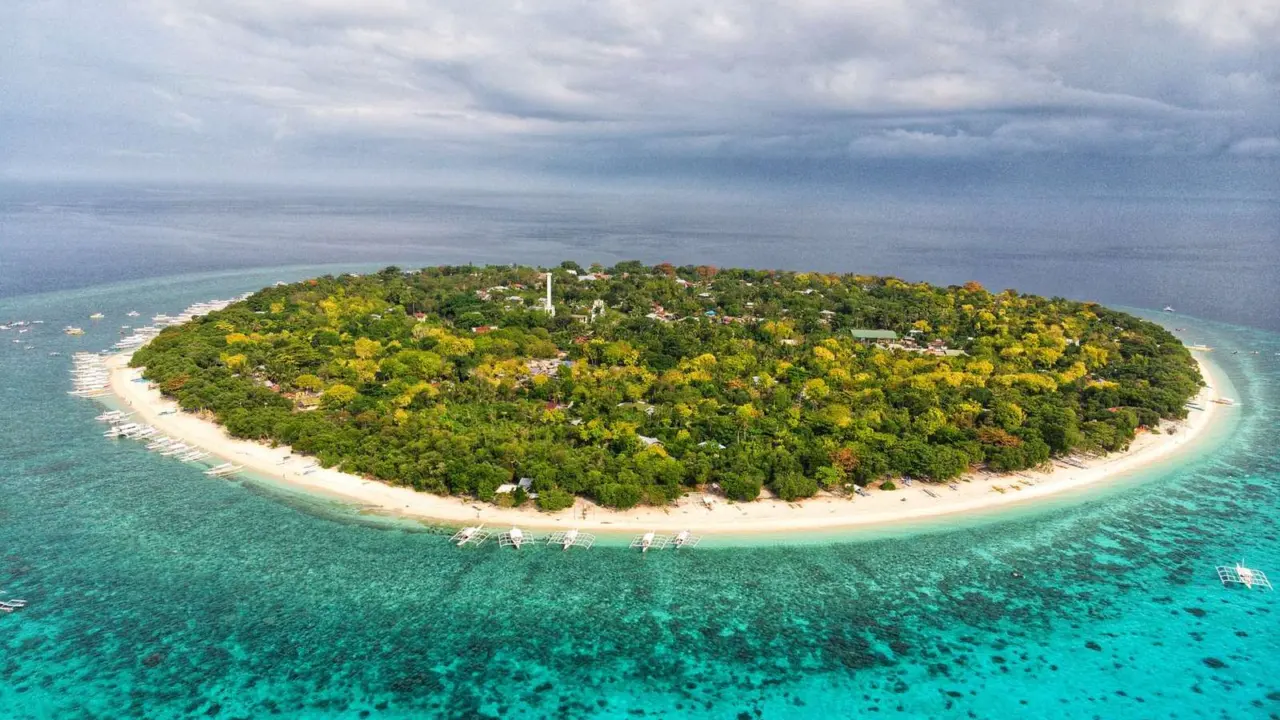
Balicasag Island is a small island off Panglao in Bohol, known for a protected reef on its west side where snorkellers and divers look for sea turtles, reef fish and steep underwater walls.
This guide sits inside the wider overview of things to do in bohol. It is an independent guide, not run by the Bohol government, a tour operator, a resort or any sanctuary office, and it sells no tours.
Where Balicasag Island is and how it is protected
Balicasag is part of the municipality of Panglao. According to Wikipedia’s entry on Panglao, the municipality’s territory includes the three smaller islands of Balicasag, Gak-ang and Pontod. A Manila Bulletin report places Balicasag about six kilometers southwest of Panglao and says the west side reef has been declared a marine sanctuary.
The sanctuary has a longer history than its tourism. The Coastal Conservation and Education Foundation’s marine protected area database records that it was established during a Silliman University marine conservation programme in 1985-86, in response to rampant illegal and destructive fishing in the early 1980’s. The same entry lists the year established as 1998, and says Silliman University Marine Laboratory gave technical assistance while the Bohol Marine Triangle Project is responsible for the management.
That origin explains the rules below. The sanctuary was created to stop destructive fishing, and the visitor rules that came later aim to protect the same reef from the pressure of tourism.
Dive areas around the island
Dive tourism around Balicasag is organised around named sites. The same Manila Bulletin report counts five dive areas but names six sites around the island, and the side of the island each one lies on.
| Dive area | Side of the island |
|---|---|
| Balicasag Marine Sanctuary | West |
| Black Forest | North-east |
| Royal Garden | North-east |
| Turtle Point | South-west |
| Cathedral Wall | North |
| Divers Haven | Southeast |
Table data from the Manila Bulletin report of December 17, 2020.
The names give a hint of what the reef offers: Turtle Point for turtles, Cathedral Wall for a vertical drop. The same report describes the underwater scenery around the island as submarine cliffs, corals, trevally, barracuda, wrasse and sea turtles.
What snorkellers and divers go there to see
Sea turtles are the main draw. A diver interviewed by Rappler in October 2018 said, “Balicasag is one of the best places in the world for turtles.” The same interview offered a balanced picture of the rest of the reef: the diver said Balicasag is not known for its corals, and that divers will notice evident environmental degradation underwater.
Diving around Balicasag goes back decades. A Rappler feature on Panglao tourism says Panglao has been known as a diving site since the ’80s, beckoning to European divers to explore its coral reefs in Balicasag Island. Today, as the Panglao entry on Wikipedia puts it, tours can readily be arranged to dive sites including Balicasag and Pamilacan.
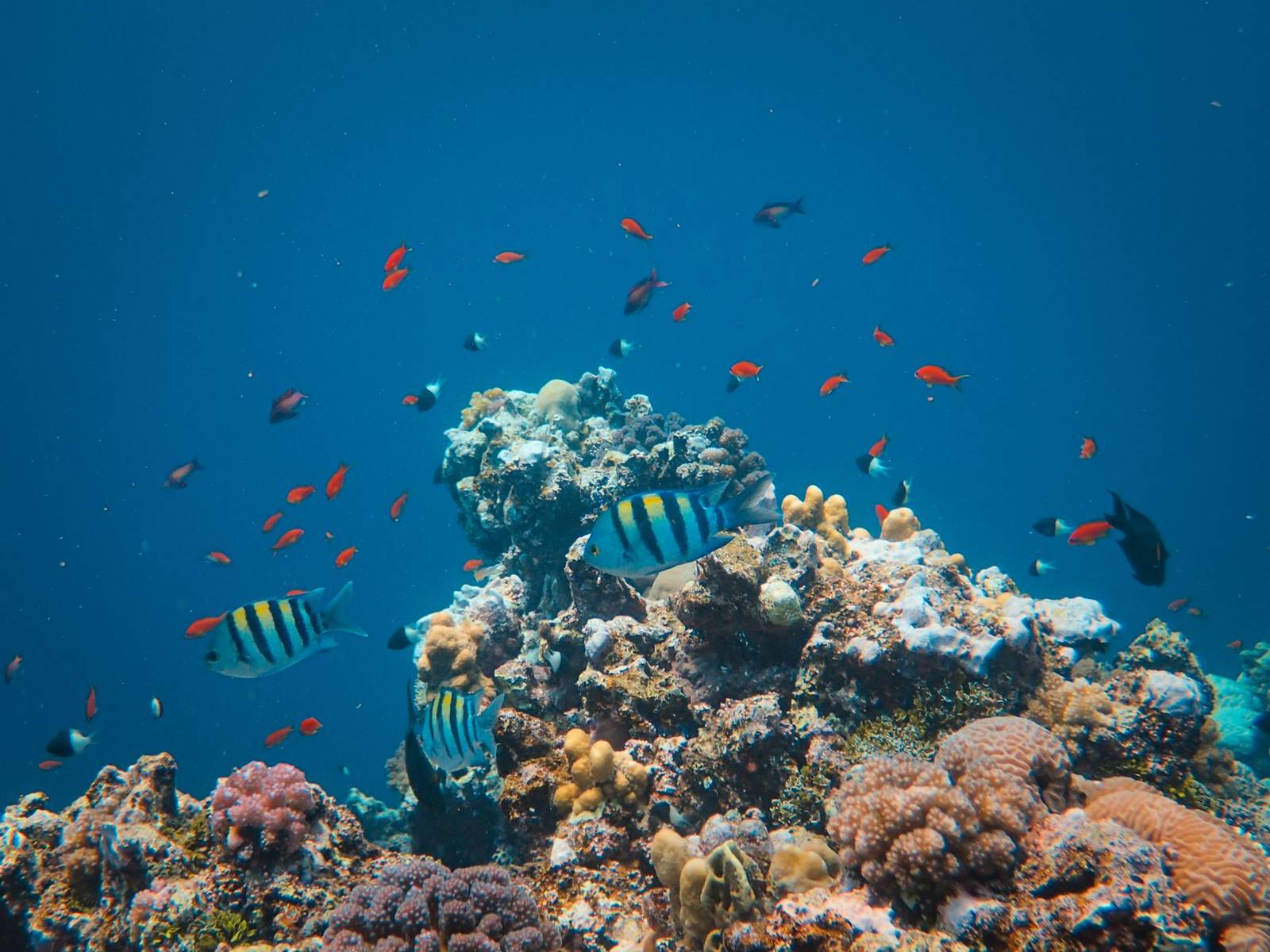
The Manila Bulletin report adds that thousands of tourists, snorkellers and divers alike, often head to Balicasag especially during the summer season, which is the background to the visitor limits described below.
Visitor limits and access rules, with dates
Rules, fees and capacities for a protected area are set locally and change over time, so each figure below is tied to the report it comes from.
- Daily limits, as of December 17, 2020: the Manila Bulletin reported that the two designated snorkeling sites would each have a carrying capacity of 200 tourists per day, while each of the five dive points would accept 60 visitors per day.
- Booking and registration, as of December 17, 2020: the same report states that all tourists planning to visit Balicasag are required to book through an accredited tour operator and register online.
- Gateway, as of December 17, 2020: a local ordinance made the Panglao jetty port the only gateway for island-hopping and snorkeling activities at the island, except for diving.
- Environmental user’s fees, as of October 30, 2018: Rappler reported that Panglao began charging environmental user’s fees for diving and snorkeling in its marine protected areas, including Balicasag, and that the new snorkeling rate increased to P150 for Balicasag Island.
The Rappler feature on Panglao tourism also describes an advance reservation or queuing system run by the municipal Coastal Resource Management Office to limit and track visitors in Balicasag. The other Rappler report says the municipality registered 44,000 divers for the five dive spots in 2017. Visitors who want current figures need to confirm them with the Panglao municipal tourism office.
Reef and turtle etiquette, from published guidance
Guidance for watching marine wildlife in the Philippines comes from a joint circular of the Department of Tourism, Department of Agriculture, Department of the Interior and Local Government and Department of Environment and Natural Resources. In the copy published by FAOLEX, the list of prohibited acts at dedicated interaction sites includes:
- any physical contact, including touching or handling, or attempted touching or handling, of marine wildlife;
- riding and stepping on, or attempting to ride or step on, any marine wildlife;
- provisioning or the use of any methods designed to attract marine wildlife using food;
- using flash, strobes, and video lights.
For Balicasag, that translates into plain habits: do not touch or chase a turtle, do not offer food, keep flash off, and let the animal move on its own. Reefs need the same restraint. When the Bohol governor spoke about Balicasag, as the Manila Bulletin reported on November 21, 2023, he said that some divers allowed their guests to step or walk on corals and called what was done very destructive. Standing on coral, whether in the shallows or on a ledge, is exactly the behaviour that report describes as damaging.
In May 2024 the Bohol governor also discouraged residents from approaching tourists with introductory diving lessons, saying that without proper guides and gear the practice would damage the island’s coral reefs. The Inquirer’s report of May 2, 2024 quotes that concern: without proper guides and gears, the practice will damage the island’s coral reefs and beds.
Pressures on the island and recent enforcement
Balicasag’s popularity has a cost, and provincial officials have said so publicly. In the Inquirer report of May 2, 2024, the governor said Balicasag Island was up for immediate restoration after inspections, and listed problems including the need for proper toilets and potable water. The same report says he asked residents to request a desalination plant for 260 households and that the provincial government would build toilets for tourists and divers.
Money from visitors also flows back to the reef. Rappler’s 2018 reporting says resources from collected environment users’ fees are allotted to Panglao’s marine areas, with coral rehabilitation at the forefront of the municipality’s conservation efforts. It attributes the degradation of corals to a long history of fishing practices that are not sustainable.
Enforcement is also real. According to the November 2023 Manila Bulletin report, the provincial government investigated after video footage showed divers harming marine life at Balicasag, and the governor warned that the Provincial Legal Office would file cases once those responsible were identified.
Combining Balicasag with the rest of Panglao
Most visitors treat Balicasag as one part of a wider Panglao itinerary. alona beach is the best-known beach on Panglao; Wikipedia’s Panglao entry calls it the most famous and most developed. The Inquirer reported that from May 1, 2024, dive and island-hopping boats were no longer allowed to stay in waters near Alona Beach, which is worth checking when planning how to reach the island.
Visitors who want a land-based wildlife stop on the same trip can read about tarsier sanctuary bohol visits, where etiquette also centres on distance, quiet and no flash. Sea and land wildlife share one rule: the animal sets the terms of the encounter.
Frequently asked questions
Where exactly is Balicasag Island?
The Manila Bulletin places it about six kilometers southwest of Panglao, and Wikipedia lists it as one of three smaller islands within the municipality of Panglao.
Is Balicasag a marine sanctuary?
Yes. The west side reef has been declared a marine sanctuary, and a marine protected area database entry records a fish sanctuary established through a Silliman University conservation programme in 1985-86.
Can visitors touch or feed the turtles?
No. Published national guidance on marine wildlife tourism interactions lists touching, handling and feeding marine wildlife among prohibited acts, along with using flash.
Are there limits on how many people can visit?
A report of December 17, 2020 described daily carrying capacities for the snorkeling sites and dive points, and a booking requirement through an accredited tour operator. Current limits are set by Panglao and can change.