A Philippine fiesta is an annual town or village celebration built around a patron saint’s feast, with a mass, a procession, shared food and music. The custom came with Spanish missionaries and has long since become thoroughly Filipino.
Visitors planning a wider trip can start with the philippines travel tips guide, then return here for the background on why these celebrations matter so much to local communities.
Where the fiesta tradition comes from
The word itself is Spanish, and so is the idea. A Christian Classics Ethereal Library essay on the fiesta explains that Spain set aside particular days to remember saints with processions and celebrations, and that when Spanish missionaries entered the Philippines during the mid-1500s they treated the fiesta as a convenient tool for teaching the Roman Catholic faith. The missionaries hoped that colourful processions and religious dramas would draw people who lived in widely scattered settlements toward the towns and their churches.
Community life in those early towns was organised around the church. In a 2009 Philstar column on the fiestas of July, Alejandro R. Roces describes Spanish priests calling people to gather and worship through the ringing of the church bells during the early period of colonization and Christianization. The parish, in other words, was the circle of households within earshot of the bell, and the annual feast day was the moment when that circle came together.
The story is not only a Spanish one. The same essay notes that, early in the Spanish period (1565-1898), existing folk rituals seem often to have been combined with what the missionaries were teaching. It suggests that an ancient fertility rite probably survives inside the Obando fiesta, even though the festival now passes simply as a Roman Catholic celebration. Where the line falls between imported ritual and older local practice differs from one fiesta to the next.
Roces sums up the result in one line: although the fiestas show the strong influence of Spanish rule, they are intrinsically Filipino in character. That mixture explains why a fiesta can feel familiar to a visitor who knows Spanish or Latin American saint’s-day festivals, yet look and taste unmistakably Philippine.
Patron saints and the shape of the fiesta calendar
The patron saint is the organising principle. According to the same column, every community has a Catholic patron saint whose feast it celebrates during its annual fiesta. Because each town and barangay has its own saint, there is no single national fiesta day. Celebrations are scattered across the calendar, each tied to the feast of whichever saint or devotion a place has adopted.
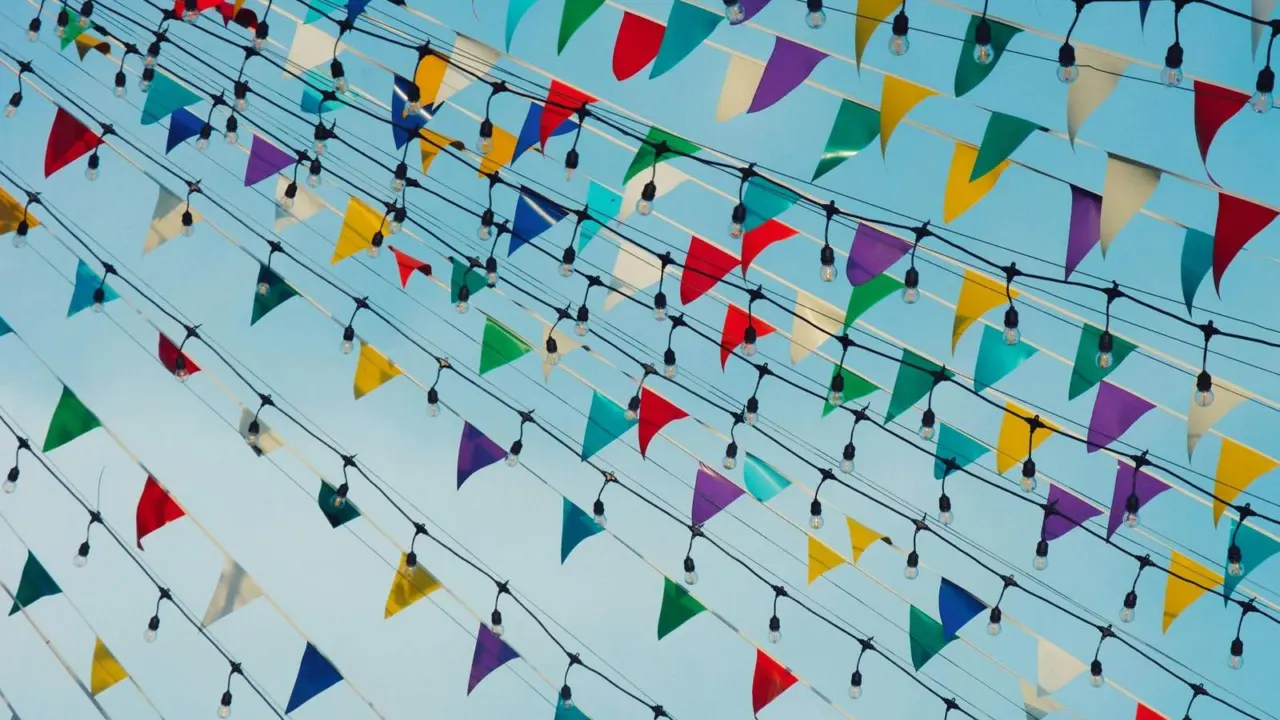
A 2011 article in Rice Today, the magazine of the International Rice Research Institute, describes the Philippines as a country with 1,001 fiestas, where brass marching bands, multicoloured buntings and heavily laden dining tables are common to many of them. The figure works as a way of saying that fiestas are everywhere, rather than as a literal count. For a traveller, the practical question is less whether a fiesta is happening somewhere and more which town’s saint is being honoured, and what that town is known for.
Some fiestas are tied to the work that supports a community. Farming towns honour the patron saint of farmers, coastal and river towns hold processions on the water, and towns associated with a particular devotion build their whole celebration around it. The three fiestas described below show how different the results can be.
What a town fiesta usually includes
The Christian Classics Ethereal Library essay observes that town fiestas have many faces, but that they usually feature a mass and a procession. After the religious part is over, the rest of the day belongs to visiting relatives, neighbours and guests. Households prepare food for anyone who arrives, music plays in the streets and plazas, and the hospitality that Roces calls legendary is on full display.
Some towns are known for a distinctive procession. The same essay singles out Naga City, where a feast of Our Lady of Peñafrancia includes a flower-decked raft with a shrine to Mary floated down the river. It also names Obando, Bulacan, home to an annual three-day festival whose procession is famous for special dances of childless couples, who believe the dances will fulfill their wishes and prayers for a child. These examples show how a general pattern of mass, procession and feast takes on local character.
Fiestas have also survived criticism. Roces notes that a former senator once proposed abolishing them on the grounds that they waste time and money, yet the fiestas continue to be celebrated. His reasoning is that it is hard to take away something that makes people happy, and that a fiesta gives local folks a reason to gather and celebrate something in common, often a good harvest.
Pahiyas in Lucban: a harvest fiesta written on the houses
Few fiestas are as visual as Pahiyas in Lucban, Quezon. The Rice Today article says that every 15th of May the town celebrates the festival to give thanks for the year’s harvest to San Isidro Labrador, the patron saint of farmers. A Philstar report adds that the name is coined after the words payas (grand or spectacular) and hiyas (gem).
The decorations grew out of a practical problem. A Rappler report from 2012 explains that people brought their harvests to church to be blessed on the saint’s feast day, and that the crop offerings eventually would not fit inside the church, so residents displayed them outside their houses instead. Rice Today tells the same story: farmers displayed their harvests in front of their houses so the priest could bless them during the annual procession. Over the years the display turned into a contest of creativity.
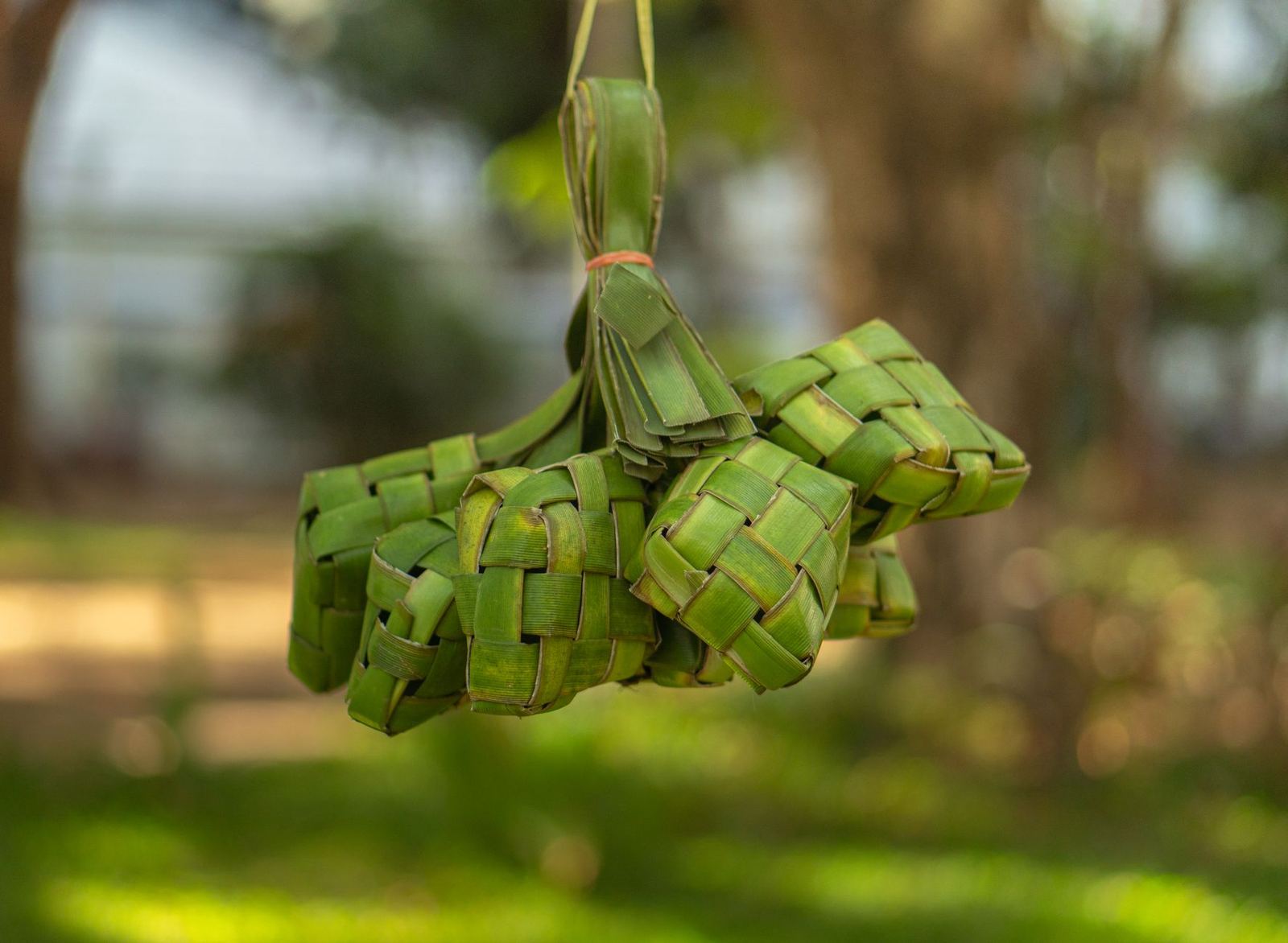
The signature material is kiping. A Philstar report describes kiping as brittle rice wafers used to adorn houses during the festival, and Rice Today adds that each is a leaf-shaped wafer of rice dough dyed with food coloring. Strung together, the wafers become lanterns, chandeliers and large flowers. The Philstar report quotes a Lucban kiping maker saying that people usually buy one aranya, a three-layered kiping chandelier, with 900 kiping, which gives a sense of the scale of the work.
Accounts of the festival’s origin differ in emphasis. Rice Today describes the thanksgiving as originally an animistic ritual of pre-Christian Filipinos that kept its core after the saint arrived, while Rappler says Pahiyas began during the Spanish era when the patron saint of farmers was introduced to Lucban. Both agree that the heart of the day is gratitude for the harvest, shown in an unusual public way.
Sinulog in Cebu: a local devotion turned city festival
Sinulog shows a different path: a small act of devotion that grew into a large civic event. A history of the festival that the Sinulog Foundation permitted Philstar to publish in January 2014 says that Magellan, on his arrival in Cebu in 1521, gave the Santo Niño, an image of the Child Jesus, as a baptismal gift to Hara Amihan, wife of Rajah Humabon, who was later named Queen Juana. The same history says the dance called sinulog was already performed by the people of Cebu before that, in honour of wooden idols, and that historians now describe it as the link between the country’s pagan past and its Christian present.
SunStar Cebu’s Sinulog history page explains the name and the movement: the dance goes two steps forward and one step backward to the sound of the drums, resembling the current of the Pahina River, which is why it is called sinulog in Cebuano. The image was later found by a soldier of Legaspi’s expedition after the Spanish arrived again in 1565, and it is now enshrined in the basilica that bears its name.
For centuries the dance remained a modest ritual. In the 2014 account, the Santo Niño fiesta is described as falling on the third Sunday of January, when children in costume danced the sinulog at the church. The modern street festival came much later: the same history credits an official of the Ministry of Sports and Youth Development with organising the first Sinulog parade in 1980. The city then set out to turn the small parade into a festival that could rival others held across the country. A date quoted in an older account is only a description of that year’s custom, so the exact weekend of any given edition should be confirmed with the organisers and the city.
Fiestas in Bohol and the wider Visayas
Bohol’s Sandugo is not a patron saint’s feast, but it follows the same spirit of public commemoration. Roces’s column places the annual Sandugo Festival in Bohol at the end of July, in memory of the blood compact between Spanish explorer Miguel López de Legazpi and the chieftain Datu Sikatuna.
The Visayas as a whole offers a useful contrast. In Cebu the focus is the Santo Niño, in Bohol it is history and friendship, and in many farming towns elsewhere in the country it is the harvest. A traveller moving between islands can see how one inherited form, a saint’s feast with a procession and a shared meal, carries different local meanings.
Visiting a fiesta with care
A fiesta is first of all a community’s own occasion, and visitors are welcomed as guests. A few habits make the experience smoother. Arrive with an open schedule, because processions run on local time. Dress modestly for church services and the procession. Ask before photographing people at prayer, and keep a respectful distance from religious images and the people carrying them.
Dates are set locally, and an edition can shift from year to year, so confirm the schedule with the town or city government before planning travel. Visitors who want to buy food or crafts at festival stalls can read the guide to the philippine peso for notes on money and card use before they go.
Fiestas also pair naturally with coastal time. Travellers adding a beach day to a fiesta trip can read about the philippines coral reefs before deciding where to swim or snorkel, and about how to protect them while doing so.
Frequently asked questions
What is a fiesta in the Philippines?
A fiesta is an annual community celebration, usually centred on the feast of the town’s patron saint. It typically combines a mass and procession with open-house hospitality, music and feasting, and it reflects the Spanish colonial period’s influence on local life.
When is the Sinulog Festival held?
A 2014 history published by Philstar describes the Santo Niño fiesta as falling on the third Sunday of January. Because actual schedules are set by the organisers each year, confirm the dates for the year of travel.
What is the Pahiyas festival known for?
Pahiyas in Lucban is known for houses decorated with kiping, rice wafers dyed in bright colours, along with fruit, vegetables and other crops. It is a thanksgiving for the harvest linked to San Isidro Labrador.
Are fiestas only religious?
No. The religious mass and procession are central, but the day also belongs to families, neighbours and visitors, with food, music and contests. Roces describes the fiesta as a community expression that has persisted because it makes people happy.