How to get to Bohol depends on the starting point: most visitors fly into Bohol-Panglao International Airport on Panglao Island, while others cross by ferry from Cebu to Tagbilaran or Tubigon. Each gateway puts a traveller in a different part of the island.
This page covers the airport, the main ferry ports and the choices that follow, as part of the wider guide to bohol tourism.
Flying into Bohol-Panglao International Airport
The airport opened on November 28, 2018, replacing the older airport in Tagbilaran, according to the encyclopaedia entry for Bohol–Panglao International Airport. The same page describes it as the gateway to Tagbilaran and the rest of mainland Bohol for domestic air travellers. Its location on Panglao Island means that arriving passengers land close to the beach resorts and dive sites of the south-west rather than in the capital city.
The old city airport is gone from the passenger map. Tagbilaran Airport was closed for scheduled passenger services on November 27, 2018, so older guidebooks and flight maps that show flights landing in Tagbilaran itself are out of date. Any current search for flights should use the airport code TAG, which now refers to the Panglao airport.
For travellers coming from abroad, the usual pattern is a connection. The airport’s own page notes that it is less than an hour’s flight from Mactan–Cebu International Airport, which it calls a gateway to central Philippines for international tourists, in the same article. That line explains why so many itineraries into Bohol begin with an arrival in Cebu or Manila and a short domestic hop afterwards. The page also records that the airport is classified as Class 1 principal domestic airport by the Civil Aviation Authority of the Philippines, even though it is billed as an international airport.
Some facts about the facility help set expectations. The runway is a 2,500-meter asphalt strip, and the passenger terminal was designed to accommodate two million passengers annually, both according to the airport’s encyclopaedia entry. The airport is also dubbed the first eco-airport in the Philippines. Aboitiz took over its operations on June 16, 2025, so signage, services and counter arrangements can differ from what older trip reports describe.
Flight schedules, routes and airlines change often, so the airlines’ own timetables are the place to confirm which routes currently serve TAG. No page on this site sells tickets or tours, and nothing here replaces an airline’s schedule.
Crossing from Cebu by ferry
Sea travel is the other major way onto the island, and the Cebu connection is the busiest. The entry for Tagbilaran says the city is linked by sea to the major port cities in the Visayas Islands and Mindanao, and that the link to Cebu City is of major commercial importance. It adds that a fastcraft ferry ride to Cebu City’s Pier 1 takes approximately 2 hours depending on weather and sea conditions. The same entry says that, as of June 2024, the route was served by Ocean Jet exclusively several times daily, with Weesam Express and SuperCat having suspended operations.
That last detail shows how quickly ferry operators come and go. A guidebook or blog post that names a company can be wrong a year later, so the operator’s own booking channel is the reliable place to confirm what is sailing today, and the crossing time quoted for a fastcraft applies only when the sea allows it.
Arrival at the Tagbilaran port puts a traveller in the provincial capital. The entry says local and international visitors to Bohol pass through the city via the Port of Tagbilaran. From there it is a land journey to anywhere else on the island, which is why travellers heading for the beaches often continue to Panglao straight away, and why those starting a loop of the countryside may begin from the city instead.
Panglao Island lies to the south-west of the city, and the entry for the municipality of Panglao puts the town of Panglao 20 kilometres from Tagbilaran. That distance is a useful way to judge how much road time the final leg adds after a morning ferry.
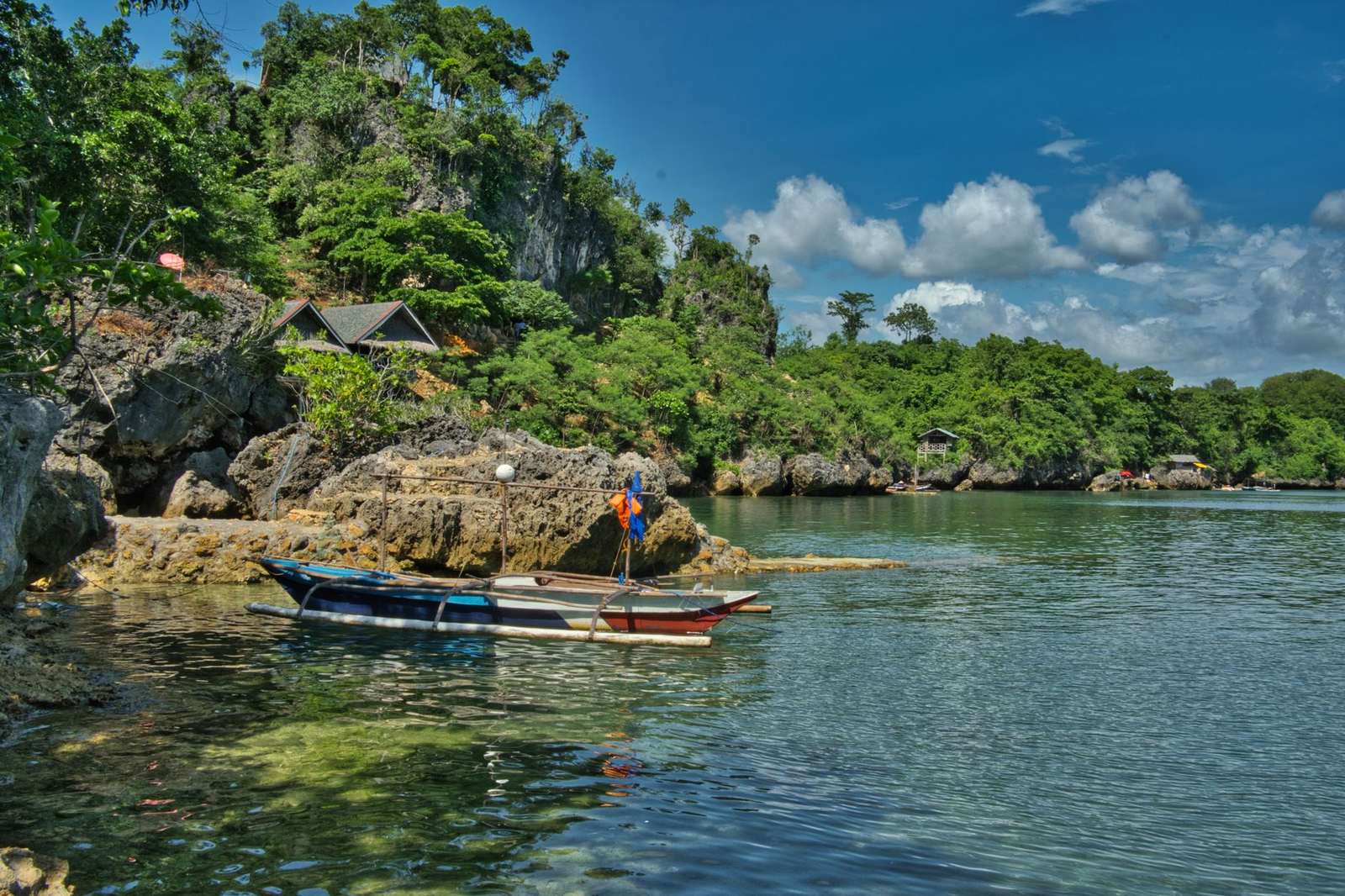
Tubigon, Jagna and the other ports
Tagbilaran is not the only entry point by sea. Tubigon, on the north coast facing Cebu, is described as 54 kilometres from Tagbilaran and the nearest seaport in Bohol to Cebu City, providing many daily ferry round-trips to Cebu City. The same page calls Tubigon’s municipal port the second largest and busiest port in the province of Bohol. For travellers whose plans start in the north of the island, or who prefer to reach the Loboc River and the interior before heading south, Tubigon avoids the longer drive from the capital.
On the south-east coast, Jagna is also a port town and sits 68 kilometres from Tagbilaran. The entry says that routes to Mindanao are available via Cagayan de Oro and Butuan, and that a ferry operates from Jagna to the port of Balbagon on Camiguin in peak seasons. Jagna therefore functions as a Mindanao-facing gateway rather than a Cebu-facing one, which suits travellers combining Bohol with Camiguin or northern Mindanao.
Further along the north coast, the entry for Talibon states that the town can be reached by ferry directly from Cebu City or via Getafe or Tubigon, followed by a journey by road. Talibon is a northern option for visitors heading along the north coast, though most first-time visitors will choose the airport, Tagbilaran or Tubigon instead.
The province itself is an island with many dependencies. The entry for Bohol describes it as consisting of the island itself and 75 minor surrounding islands, which explains why boat links and small-island crossings feature so heavily in local transport.
Choosing a gateway: air, Tagbilaran, Tubigon or Jagna
The table below compares the entry points by what each is best for. The distances come from the encyclopaedia entries cited beneath it.
| Gateway | Where it is | Best suited to |
|---|---|---|
| Bohol-Panglao International Airport | Panglao Island, in the south-west | Travellers flying in who are staying in Panglao |
| Tagbilaran port | The provincial capital | Cebu ferry arrivals heading anywhere on the island |
| Tubigon port | North coast, 54 kilometres from Tagbilaran | Cebu ferry arrivals starting a northern or interior route |
| Jagna port | Jagna town, 68 kilometres from Tagbilaran | Mindanao and Camiguin connections |
Distances in the table are taken from the encyclopaedia entries for Tubigon and Jagna.
A traveller who wants to reach the beach on arrival day will usually be better served by the airport. A traveller with a flexible schedule who prefers to see the sea crossing, or who is coming from Cebu with luggage and no wish to repack for a flight, will find the ferry more direct. Neither choice is universally better, and each has its own weather exposure.
Planning around weather and timing
Both gateways are exposed to the conditions of the central Philippines. The fastcraft crossing time quoted earlier is explicitly tied to weather and sea conditions, and rough weather can delay or cancel sailings. Anyone building a tight itinerary around a crossing should leave room before a connecting flight, especially when travelling during the wetter months. The page on the best time to visit Bohol sets out how the seasons and festival dates affect crowds and conditions.
Ports and airports also change hands, upgrade and reorganise, which is the same reason the airport takeover noted above matters. The takeover is a reminder that facilities continue to evolve, so a trip plan should be confirmed against current operator information in the days before travel.
Visitors whose main interest is the island’s protected areas, community tours and low-impact options will find that the arrival gateway matters less than the plan afterwards. The guide to Bohol ecotourism covers the places worth building a route around, whichever port or runway comes first.
After arrival: getting to your base
Whichever way a traveller enters, the next step is a land journey. From the airport on Panglao Island, the beach areas are close, while the capital and the interior require a longer trip by road. From Tagbilaran port, the road network leads to the rest of the island, and a chartered vehicle gives more control over the schedule. From Tubigon, the road leads on towards Tagbilaran and the interior. From Jagna, the road leads back towards the capital.
It helps to decide the base before booking the journey, because a late ferry arrival in Tagbilaran followed by a long road trip to a remote stay can use up the evening. Booking the first night close to the arrival point, then moving on the next morning, is a common way to smooth the first day.
Island attractions are spread across the province, so the arrival gateway shapes how much time is spent in a vehicle. Mapping the places on a trip list first, then choosing the gateway that sits closest to the first and last stops, keeps transfers short.
Frequently asked questions
Where does a flight to Bohol land?
Flights land at Bohol-Panglao International Airport on Panglao Island, which opened on November 28, 2018 and replaced the older airport in Tagbilaran, as set out on the airport’s encyclopaedia page.
How long is the ferry from Cebu to Tagbilaran?
The Tagbilaran entry gives approximately 2 hours by fastcraft to Cebu City’s Pier 1, depending on weather and sea conditions, according to the encyclopaedia entry on the city.
Is Tubigon or Tagbilaran the better port for arrivals from Cebu?
Tubigon is described as the nearest seaport in Bohol to Cebu City, while Tagbilaran is the provincial capital and the main arrival point, so the better choice depends on where the traveller is heading, as the Tubigon entry explains.
Can Bohol be reached from Mindanao by sea?
Yes. The Jagna entry says routes to Mindanao are available via Cagayan de Oro and Butuan, with a seasonal ferry to Camiguin, as noted in the Jagna encyclopaedia page.