
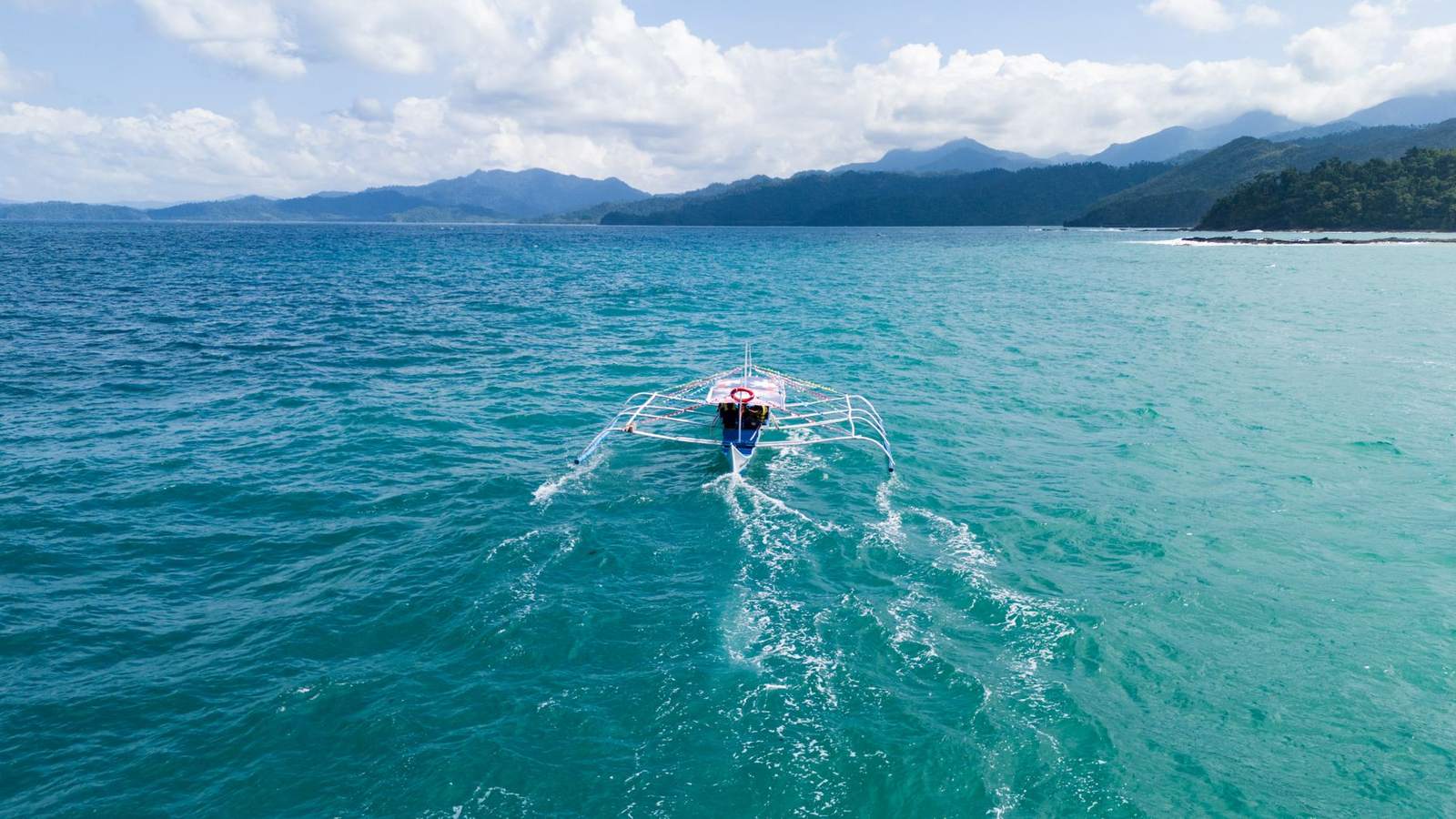
The Cebu to Bohol ferry crosses the Cebu Strait from Cebu City’s Pier 1 to Tagbilaran, and a fastcraft ride takes approximately 2 hours depending on weather and sea conditions.
This guide covers the ports, the crossing, check-in rules and the other ways across, and the Philippines travel tips guide covers the wider planning around a trip like this.
The crossing at a glance
Bohol and Cebu are separate island provinces, and the water between them is the Cebu Strait, which separates the island provinces of Cebu and Bohol. Most visitors cross it between Cebu City, the regional capital, and Tagbilaran, the capital of Bohol. Tagbilaran sits 72 km (45 mi) south of the regional capital, Cebu City, and that distance is why the sea link has become the standard route between the two islands.
The fastcraft service is the version most travellers mean when they say “the ferry”. Tagbilaran’s sea link to Cebu City is of major commercial importance, so the crossing is part of the city’s everyday connection to the rest of the Visayas, not only a holiday route.
Two things shape every crossing. The first is the port pair: a fastcraft from Cebu City arrives at Tagbilaran, which the Department of Transportation calls the city’s main seaport. The second is the weather. The crossing time depends on weather and sea conditions, so the figure is a typical value, not a guarantee. Anyone connecting to a flight, a tour or a hotel check-in on the same day should leave a generous buffer around it.
Ports on both sides of the strait
On the Cebu side, the city’s port handles both international and domestic traffic. The domestic side of the harbor is the relevant one here: the harbor consists of international and domestic sections, and the domestic destination list includes several Bohol ports: Talibon, Tagbilaran, Tubigon and Ubay. The Tagbilaran fastcraft ride ends at Cebu City’s Pier 1.
On the Bohol side, Tagbilaran is the main gateway. The Philippine Ports Authority and the Department of Transportation expanded its passenger facilities after the 2013 earthquake. A GMA News report from April 2021 quotes the department saying the new terminal building was completed on October 31, 2020, and that the port had “sustained significant structural damage from a strong earthquake in 2013”. The same report says the existing building could accommodate 497 passengers and that the new building adds 613 more, bringing the total passenger capacity to 1,110.
Those capacity figures matter for one practical reason: Tagbilaran’s terminals are built for large crowds, which is useful to know when a holiday weekend fills the sailings. They do not say anything about how quickly a queue moves, so arriving early remains the sensible approach.
Tagbilaran itself is a compact city. PhilAtlas describes it as a coastal component city and the provincial capital, with a 2020 Census population of 104,976. The city also has an Integrated Bus Terminal in the Dao district for routes across the province, which makes the city a practical place to land and transfer onward.
Other Bohol ports reached from Cebu
Tagbilaran is not the only landing point. Tubigon is located 54 kilometres (34 mi) from Tagbilaran and is the nearest seaport in Bohol to Cebu City, with many daily ferry round-trips. Travellers who want a shorter land leg to a destination away from the capital may find that a different port suits their plans better than Tagbilaran does.
The table below sets the main options side by side without prices, since fares and sailing times change.
| Route | Bohol landing | Notes |
|---|---|---|
| Cebu Pier 1 to Tagbilaran | Tagbilaran, the provincial capital | Fastcraft ride takes approximately 2 hours, weather permitting |
| Cebu to Tubigon | Tubigon, on the Cebu Strait coast | Nearest Bohol seaport to Cebu City, 54 kilometres from Tagbilaran |
| Cebu to Ubay or Talibon | Ubay and Talibon, Bohol | Both appear among the Bohol destinations of Cebu’s domestic port |
Table data comes from the Tagbilaran and Tubigon encyclopedia entries and the Port of Cebu entry.
The table leaves the other rows without a time because no typical duration is given for them. The right choice depends on where the trip is going next. A traveller whose first stop is Panglao generally lands in Tagbilaran, while someone heading elsewhere on the island can compare the other ports.
Operators and how to read a schedule
Operators, fares and timetables on this route change often, so this guide names them only with a date. The fastcraft route was served by Ocean Jet exclusively as of June 2024, with Weesam Express and SuperCat having suspended operations. OceanJet’s own booking site, as of 8 November 2026, still lists Cebu – Tagbilaran among its popular routes. Either statement can be out of date by the time a trip is planned, so the operator’s own site is the place to confirm times.
A schedule is easiest to read in three steps. Find the departure port and pier first, since the pier printed on the ticket is the one that counts. Then match the departure to the travel date. Finally, work backwards from the check-in deadline rather than from the departure time, since boarding closes earlier than the vessel leaves.
Independent booking sites and aggregators also list this route. They are convenient for comparing, but a timetable that is a few years old can look just as authoritative as a current one. The operator’s own page is the reference when two sources disagree.
Check-in, ID and baggage
Ticket rules differ between operators, so the following describes one operator’s published policy, taken from OceanJet’s FAQ page as of 8 November 2026. That page says passengers must check in at least 30 minutes before the scheduled departure time and must present a valid ID that matches the name on the ticket. It also says tickets are non-transferable, so the name has to match the person travelling.
Baggage allowances are strict on fastcraft. The same FAQ says each passenger is allowed only one piece of hand-carried baggage and that, for Tourist Class, it must not exceed ten kilograms. Valuables belong in that hand-carried bag. Travellers carrying more than this should read the operator’s current baggage rules before the day of travel.
The FAQ also sets out boarding rules for passengers who are sick or pregnant, so anyone in those situations should read the operator’s page in advance. Medical questions go to a doctor, not to a travel guide.
Weather, delays and cancellations
The typical duration stated earlier depends on weather and sea conditions. Rough weather can delay or cancel sailings, and the operator makes the final call on any given departure. The OceanJet FAQ states that if the voyage is cancelled by the operator, a full refund of the ticket value will be given. Where the vessel cannot take passengers to the port on the ticket, the operator says it may arrange other reasonable transport instead.
OceanJet also publishes a travel advisories page. At the time of writing, as of 8 November 2026, it reads “No travel advisories at this time”. That is a snapshot, not a forecast, so it is worth reading again the day before travelling. A flexible itinerary is the best protection: avoid placing a non-refundable tour or an international flight in the same afternoon as the crossing.
Ferry or flight, and what comes next
Air travel is the alternative for anyone who prefers not to cross by sea. Bohol-Panglao International Airport is situated on Panglao Island, southwest of Tagbilaran, and it replaced Tagbilaran Airport on November 27, 2018. A visitor who lands there does not pass through the city’s seaport at all, so the ferry and the flight lead to different parts of Tagbilaran and Panglao.
The ferry has its own advantages. It connects directly to the Tagbilaran city centre, and for anyone already in Cebu City it avoids an airport transfer on either end. It also fits itineraries that link the islands in sequence, which the Visayas island hopping guide explains in more detail.
A broader look at Philippines transportation, from jeepneys and tricycles to vans and ferries, sits in its own guide. Once the ferry lands in Tagbilaran, tricycles, multicabs, taxis and jeepneys serve the city, and buses and vans are usually hired for out-of-town travel.
Frequently asked questions
How long does the Cebu to Tagbilaran ferry take?
A fastcraft ride from Cebu City’s Pier 1 to Tagbilaran takes approximately 2 hours, depending on weather and sea conditions, as described for Tagbilaran.
Which port does the ferry leave from in Cebu?
Departures for the Tagbilaran fastcraft are described at Pier 1 in Cebu City. Piers can change between operators, so the pier printed on the ticket is the one to use.
How early should passengers check in?
OceanJet’s FAQ, as of 8 November 2026, says passengers must check in at least 30 minutes before the scheduled departure time with a valid ID matching the ticket.
Is there a ferry from Cebu to a Bohol port other than Tagbilaran?
Yes. Tubigon is the nearest seaport in Bohol to Cebu City, and Talibon and Ubay also appear among the Bohol destinations listed for the Port of Cebu.