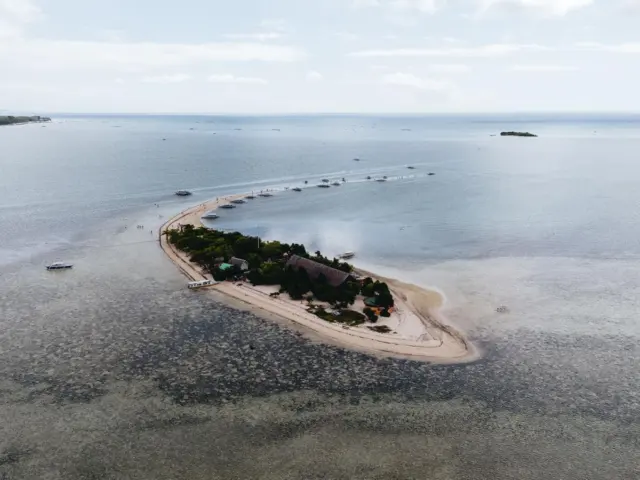
The Bohol Panglao International Airport is the island province’s main gateway, built on Panglao Island and opened in November 2018 as the Philippines’ first eco-airport, with solar technology, natural ventilation and extensive landscaping.
For the wider picture of the island, the guide to bohol tourism covers regions, seasons and planning. This page explains how the airport came about, what makes it an eco-airport and how it fits into a trip to Bohol.
Where the airport sits and what it replaced
The airport stands in Barangay Tawala on Panglao Island, on the island that holds Bohol’s best-known beach resorts. It took over from the old Tagbilaran Airport, which had been the gateway to Bohol. According to Rappler’s coverage of the opening, President Rodrigo Duterte led the inauguration on Tuesday, November 27, 2018, and operations began on Wednesday, November 28, 2018. The Civil Aviation Authority of the Philippines (CAAP) described the new facility as a “total upgrade” from the airport it replaced, and Tagbilaran Airport was closed once flights moved over.
The site is large compared with its predecessor. Rappler reports that the new airport is built on a site 10 times bigger than the Tagbilaran Airport. Peak-hour capacity rose from 400 passengers at the old terminal to 650, and the design handles up to two million passengers a year. The facility is also “night-rated”, which means flights can operate in the evening, something the old airport could not offer.
One detail that helps travellers reading old tickets and itineraries: the new airport kept the airport code TAG. As The Freeman reported at the time, the new airport continues to use the existing IATA code “TAG”, and Philippine Airlines told passengers that tickets issued for travel to or from TAG remained valid. That is why booking tools still list Tagbilaran by that code even though the runway now lies on Panglao Island.
How the project came together
The airport was built with Japanese development assistance. Rappler states that the P8.91-billion project was funded through official development assistance from the Japanese government, with support from the Japan International Cooperation Agency. Construction began in 2015 under the Aquino administration. By the time the Duterte administration took over, the project was 48% delayed, according to the Department of Transportation (DOTr). It was then fast-tracked and finished in 2018, ahead of the original target of 2021.
Airport Technology gives a slightly different financing breakdown on its project profile: the investment is listed at PHP8.9bn, of which PHP5.862bn came from a Special Terms for Economic Partnership loan from JICA, with the national government covering the remainder. The two sources round the cost differently, but both place it close to nine billion pesos, and both describe the project as a greenfield airport rather than an upgrade of the old site.
The same profile notes that the airport was designed as a tropical airport, planned in keeping with its island setting and described as a tropical resort in character. That framing shaped many of the choices covered in the next section.
The eco-airport features
The “eco-airport” label comes from a set of design decisions rather than a single feature. The airport was nicknamed the “Green Gateway to the World”, and Rappler reports that solar technology for the hot water supply system could prevent as much as 18 tons of carbon dioxide emissions per year. A rainwater catchment system reduces the load on the drainage system, and the collected rainwater is used for domestic purposes.
The landscaping is part of the design too. According to the same report, the DOTr said the airport grounds include around 1,700 trees, thousands of shrubs and 11 hectares of sodding or grass. To compensate for the trees cut to build the airport, some 624,100 seedlings were being planted around the province.

Airport Technology lists further measures on its project profile. The airport has a photovoltaic power generation system and a filtering system that prevents pollution of the surrounding area through drainage during construction. Geotextile sheets are used in the soaking yard so that drainage water does not seep into the surroundings. LED lights, natural light and ventilation serve most public areas, and air-conditioning is powered by solar energy and is limited to the pre-departure area.
A World Environment Day feature from the operator side restates the same design principles. The Aboitiz Eyes feature describes roof-mounted solar panels that supply a portion of the airport’s energy, solar-powered water heating, and a terminal designed to maximise natural light and ventilation. It adds that measures were put in place during construction to help protect nearby marine and coastal ecosystems, which matters on an island whose reefs and coastline are central to its appeal.
Terminal, apron and flight operations
The passenger terminal was designed with Bohol’s landscape in mind. Airport Technology says the roof is a multi-curved structure that appears to float over the building and takes inspiration from the Chocolate Hills, the island’s best-known geological feature. Inside, the terminal houses domestic and international check-in halls, pre-departure lounges, baggage claim areas and concession spaces, including duty-free shops. The public concourse has access to toilets, car rental, a bank and an airline ticketing office, according to the same profile.
On the airfield side, The Freeman noted in 2018 that the apron can accommodate seven aircraft at one time, including large aircraft used for international flights. Airport Technology adds that the complex includes a control tower, an air traffic control building, a fire station and a maintenance building, along with utilities such as a powerhouse, water supply and a sewage treatment system.
The airport is described as international because it is designed to receive overseas flights, but the mix of routes changes over time. Philippine Airlines, Cebu Pacific and AirAsia Philippines were the carriers named by The Freeman as set to begin operating from the new airport at launch. Airlines add, suspend and resume routes regularly, so the airline websites and the airport operator are the right place to confirm which services are running for a given travel date.
From the airport to Tagbilaran and Panglao
Arrivals head either to the beach communities of Panglao Island or onward to the capital. For travellers planning a city stay, the guide to tagbilaran city sets out what the provincial capital offers.
The trip between the capital and the airport is a real consideration when planning flight departures. As of the November 28, 2018 report in The Freeman, land travel from Tagbilaran City centre to the Panglao airport was approximately 40 minutes, and Philippine Airlines advised passengers to allow at least one hour of travel time. Road conditions, traffic and the time of day all affect the real figure, so the safe approach is to build in a buffer rather than treat the 2018 estimate as a promise.
Because the airport sits on Panglao Island itself, visitors staying in the island’s beach communities are relatively close to the terminal. That proximity was one of the arguments for relocating the airport: it put the main tourist destination and the gateway on the same island. The Freeman quoted aviation think tank CAPA Centre for Aviation noting that Panglao attracts over 600,000 annual visitors, and that Bohol attracted 1.1 million visitors in 2017, with more than half of them staying in Panglao.
What the eco-airport means for responsible travel
An eco-airport is a start rather than a finish line. The airport’s own features reduce its footprint, but most of the environmental impact of a trip comes from the flight itself and from what visitors do after landing. The airport’s design does line up with the island’s wider positioning, covered in the guide to bohol ecotourism, which looks at protected areas, community-run tours and low-impact practices across the province.
Practical habits make a difference on the ground. Choosing public or shared transport from the airport where it suits the itinerary, packing a reusable water bottle, and following the rules at wildlife sites such as tarsier sanctuaries and marine reserves all support the same goals the airport was designed around. Wildlife in particular should be watched from a distance: tarsiers are nocturnal and easily stressed, so touching and flash photography are not appropriate.
This site is an independent travel guide. It is not affiliated with the airport, its operator, the Civil Aviation Authority of the Philippines or any airline, and it does not sell tickets or tours.
Frequently asked questions
Is the Bohol Panglao International Airport really the first eco-airport in the Philippines?
Philippine media coverage at the time of the opening, including Rappler and The Freeman, called it the country’s first eco-airport, and the operator’s World Environment Day feature repeats that description.
Where is the airport located?
It is in Barangay Tawala on Panglao Island, according to The Freeman, and it replaced the old Tagbilaran Airport as the commercial airport serving Bohol.
What is the airport code?
The airport uses the code TAG, inherited from the old Tagbilaran Airport, and tickets issued for travel to or from TAG stayed valid when flights moved.
How many passengers can the airport handle?
The design capacity is up to two million passengers a year, with up to 650 passengers at peak hours, based on the figures in the Rappler report.
Can flights land at night?
Yes. Rappler reports that the new airport is night-rated, allowing evening flights that the old Tagbilaran Airport could not handle.